GPS Engine Immobilizer Malfunction Blocking Driver Ignition Start
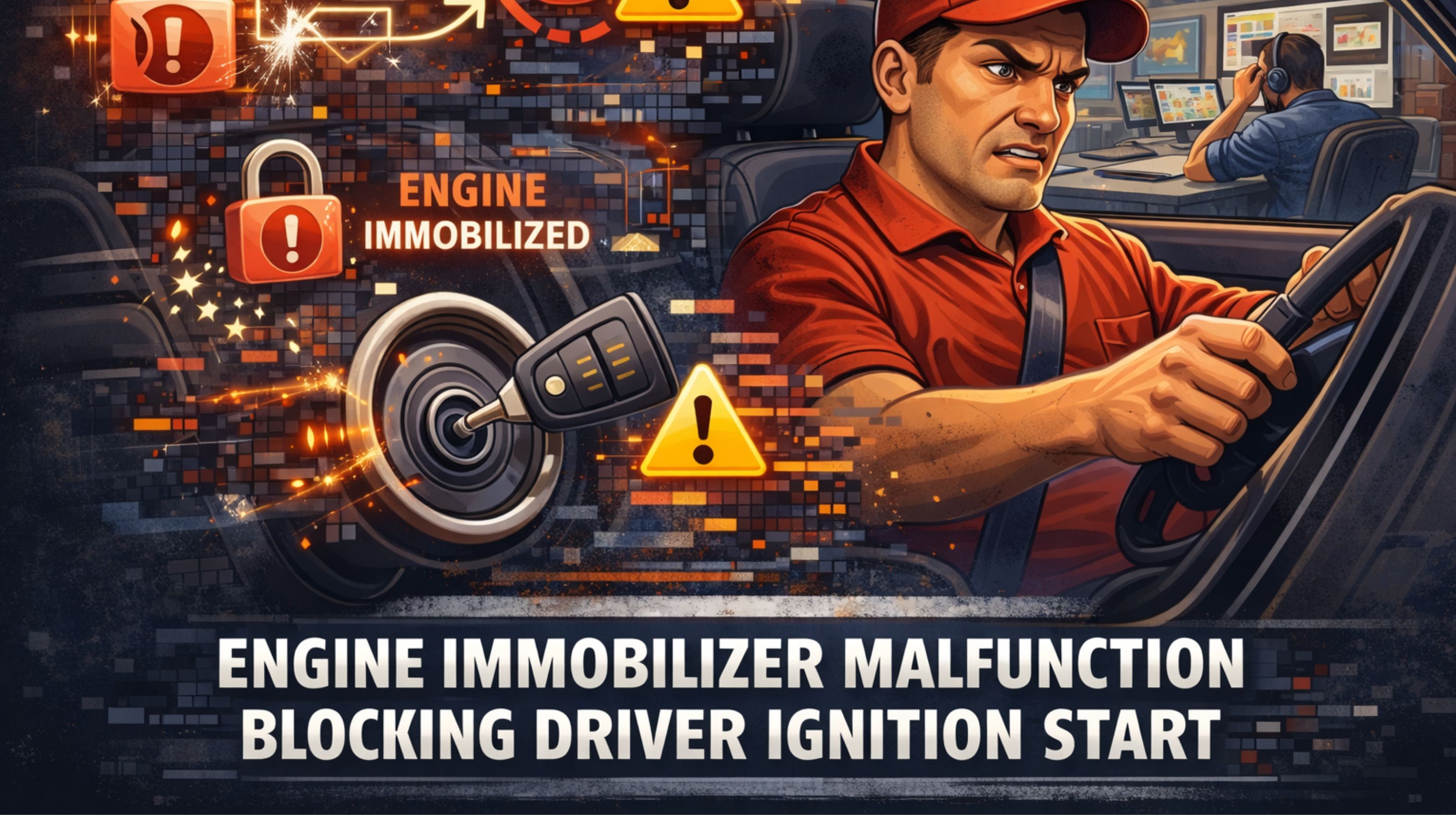
GPS Engine Immobilizer Malfunction Blocking Driver Ignition Start
A GPS engine immobilizer malfunction that physically blocks a driver from starting the ignition is a critical system failure, not a simple glitch. Honestly, this immediate operational halt signals a breakdown in the secure handshake between the vehicle's hardware, the telematics device, and the central fleet management software. When that fails, you're not just looking at a delay—you're putting both security and revenue directly on the line.
What a Blocked Ignition Means for Your Fleet
When the immobilizer fails stuck in the "locked" state, it means the authorized "start" command from the controller never reached the vehicle's ECU. Or, maybe the device just misinterpreted a valid GPS signal as a theft event. In real-world fleets, we've seen this happen when a device's internal backup battery fails during a main power fluctuation. That little failure can cause it to send a permanent lock signal, and suddenly your truck's dead in the water.
The Reality Under Fleet Load and Scale
At scale, the problems multiply. A single device firmware bug or a single corrupted geofence rule can cascade. You have to imagine a dozen trucks at a depot all failing to start at 5 AM because a batch update to your geofencing alerts system misapplied an "auto-immobilize" rule. The non-obvious detail people miss is network latency. If the device's periodic "all clear" ping gets delayed, the central server might assume a fault and initiate a remote lock on its own. It's an automated decision that can cause a real mess.
Common Mistakes and Escalating Failure Patterns
The biggest mistake is assuming this is just a vehicle battery issue and bypassing the immobilizer. That creates a security gap and completely masks the root cause. Technicians often make things worse by repeatedly power-cycling the telematics device, which can corrupt its secure boot sequence. Another common failure pattern? Using aftermarket ignition wiring that introduces signal noise. The immobilizer relay can interpret that noise as a tamper attempt and lock everything down.
Decision Help: Fix, Reconfigure, or Replace the System
The decision boundary here is usually clear. If the fault is isolated to one vehicle—say, from faulty wiring or a single bad device—then a fix is possible. But if multiple vehicles across different models show the same lockout, the problem is almost certainly in the server-side logic or a fleet-wide firmware update. That demands an immediate system reconfigure, or even a redesign. Look, when internal fixes like relay resets and rule audits fail, the immobilizer subsystem itself might just be unreliable. At that point, hardware replacement is necessary. A persistent gps controller issue here often points to a fundamental mismatch between the security protocols and how real-world vehicle CAN bus communication actually works.
FAQ
q: why would my gps tracker prevent the engine from starting?
a: It's designed as a theft deterrent. But a malfunction, low device power, a lost GPS signal that gets interpreted as theft, or even a corrupted remote command can cause it to erroneously engage the immobilizer circuit and block the ignition.
q: can a low vehicle battery cause an immobilizer lockout?
a: Yes, but it's usually indirect. A voltage drop can make the telematics device reboot erratically. During that unstable state, it might send a default "lock" signal to the vehicle's ECU. That prevents start-up until full power is restored and the device manages to re-sync properly.
q: how do i know if it's the tracker or the car's anti-theft system?
a: You can temporarily disconnect the telematics device's immobilizer relay (you'll need to consult the wiring diagram). If the car starts then, the fault is in the tracker or its commands. If it still doesn't start, the issue is likely the vehicle's own factory immobilizer. This test is critical for getting the diagnosis right.
q: when is it time to replace the gps immobilizer hardware?
a: Replace the hardware when lockouts become random and unrepeatable, but only after you've verified all server rules, updated the firmware, and confirmed the vehicle wiring is good. That pattern indicates failing internal components in the device itself—stuff you can't fix with software. It's a clear boundary for when to stop internal troubleshooting.


Comments
Post a Comment