Fleet Location History Missing? Audit Data Gap Risk & Recovery Solution
Fleet Location History Missing? Audit Data Gap Risk & Recovery Solution
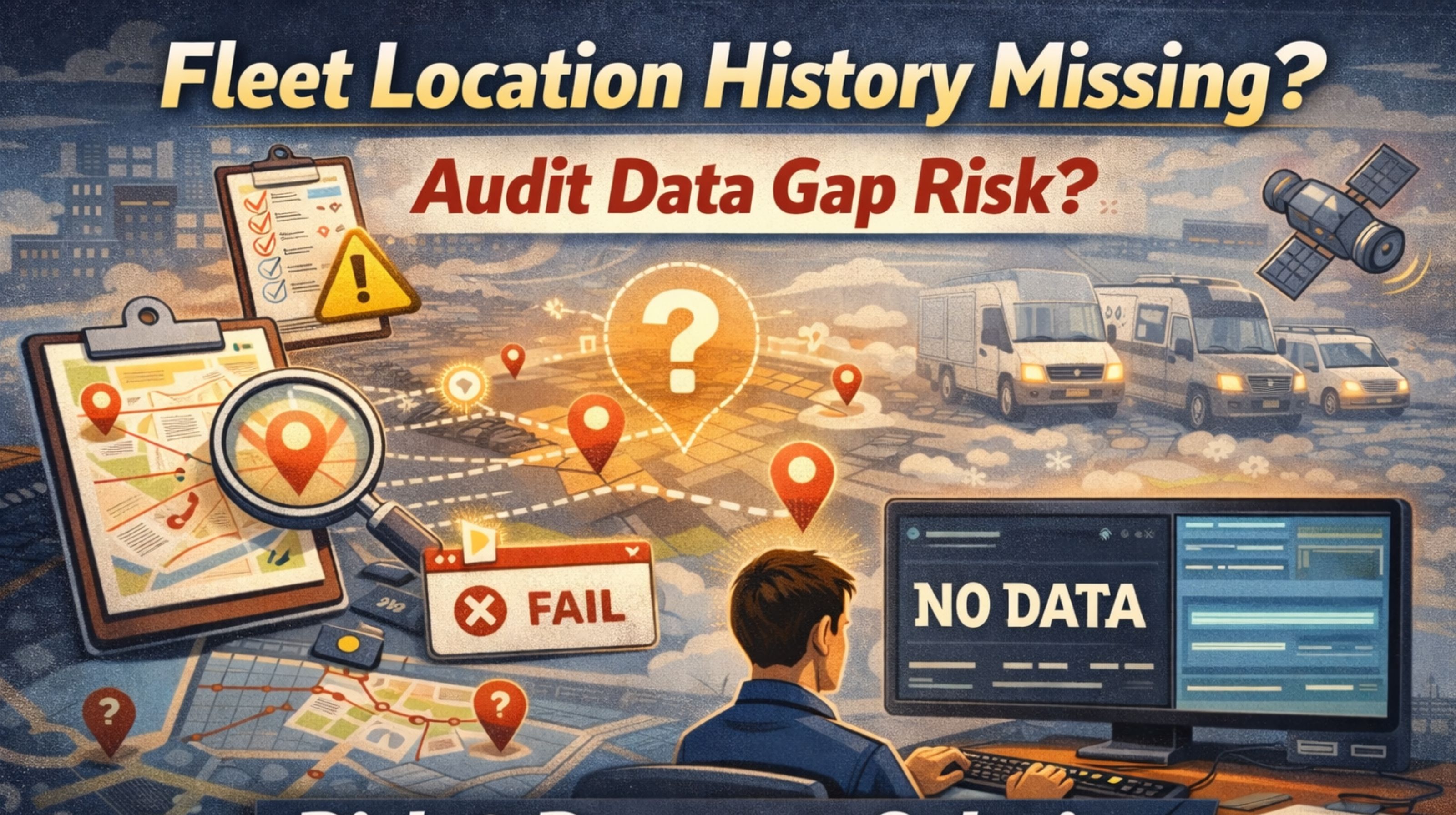
So your fleet location history is missing. The dashboard's showing gaps, blank timelines, or just stale position pings. Honestly, this isn't some minor data delay—it's a direct failure of the telematics data pipeline that everything else relies on: compliance audits, driver hour verification, route reconstruction. The immediate risk? An unverifiable audit trail. When location history fails, you simply can't prove vehicle routes, validate delivery proof, or defend against wage disputes. Operationally, it's a blind spot. Your historical analysis and performance review turns into guesswork. This gap usually signals a breakdown somewhere between the GPS device, the onboard controller logic, and the cloud system that's supposed to ingest it all.
What Missing Fleet Location History Actually Means
Missing location history means your telematics system failed to capture, buffer, or transmit sequential GPS data for one or more vehicles over a period. It's not just a "no signal" event; it's a failure in the data continuity chain. Think about it: the controller on the vehicle collects GPS fixes, timestamps them, and stores them in a buffer before sending them via cellular. A gap happens when that buffer gets corrupted, the transmission fails repeatedly, or the cloud API just rejects the data packet. What you see in practice is a straight line on the map between two points, missing all the turns and stops, or a complete absence of data for hours. This breaks the chain of custody for the vehicle's movement. Suddenly, you can't accurately report on idle times, route adherence, or unauthorized stops—which is core data for both your fleet management software and regulatory compliance.
The Reality Under Operational Load
At scale, missing history creates a systemic risk that's easy to underestimate. For a 50-vehicle fleet, even a 5% data gap rate can mean over 100 hours of unaccounted vehicle time per month. That directly hits payroll reconciliation and delivery SLA validation. The problem compounds, too. A single vehicle with a faulty controller or a weak cellular module can have its data gaps hidden by aggregate reporting, only to surface during a targeted DOT audit or a customer dispute over a missed time window. You might start noticing a 15-20% mismatch between reported engine-on hours and logged GPS movement—that's a clear red flag. In high-density urban operations or areas with poor coverage, these gaps can become chronic, forcing dispatch to rely on driver calls instead of real-time tracking. That erodes efficiency and control pretty fast.
Common Mistakes and Hidden Risks
The most critical mistake is treating missing history as a temporary "network issue" that'll just fix itself. That assumption leads directly to escalating compliance exposure. Another error is trying to manually patch the logs, which creates inconsistency and can actually be flagged as fraud in an audit. On the technical side, a common root cause is overlooking the device's internal memory buffer limit or firmware clock drift, which can cause the controller to overwrite unsent data. A less obvious risk is API integration failure. Your GPS fleet management software dashboard might look online, but the middleware that translates raw GPS data into location history could be dropping packets under load, creating silent data loss. The result is a false sense of security while your actual audit trail is disintegrating.
Decision Help: Recovering Visibility and Closing Gaps
Here's the decision point: when the usual steps—configuration resets, SIM card swaps—don't restore consistent history, the problem is probably architectural. You need to move from an unstable tracking state, characterized by manual data reconciliation and unpredictable audit readiness, to a stabilized tracking architecture. That means evaluating the entire data chain: the GPS tracking device's health, the controller's firmware and buffer management, and the reliability of the data pipeline into your platform. For chronic issues, replacing aging hardware or even redesigning the telematics integration might be necessary. The goal is to ensure coordinated controller logic, a unified reporting pipeline, and predictable data completeness. You need controlled compliance exposure and a verifiable location history for every vehicle, every day.
FAQ
q What causes fleet location history to go missing?
a Causes can include cellular transmission failure, corrupted data buffers in the vehicle tracking device, firmware errors that cause clock drift, or API ingestion failures in the cloud. In my experience, it's rarely just a "bad GPS signal."
q How big of a compliance risk is missing location data?
a It's a severe risk. Auditors typically require continuous, unbroken logs for HOS compliance, IFTA fuel tax reporting, and proof of delivery. Gaps can lead directly to fines, failed audits, and serious liability in accident investigations.
q Can missing history data be recovered or reconstructed?
a Sometimes, yes. If the data is still buffered on the device, a forced transmission might recover it. But permanently lost data can't be accurately reconstructed without risking audit integrity. That's what really highlights the need for a reliable system from the start.
q When should I consider replacing tracking hardware vs. troubleshooting?
a If gaps persist across multiple vehicles, occur daily, or clearly correlate with specific models or ages of hardware, then widespread failure is likely. Persistent issues like that indicate a systemic limit where replacement, not just more tuning, is the actual solution.


Comments
Post a Comment