Fleet Geofence Alert Failure During a Theft Incident
Fleet Geofence Alert Failure During a Theft Incident
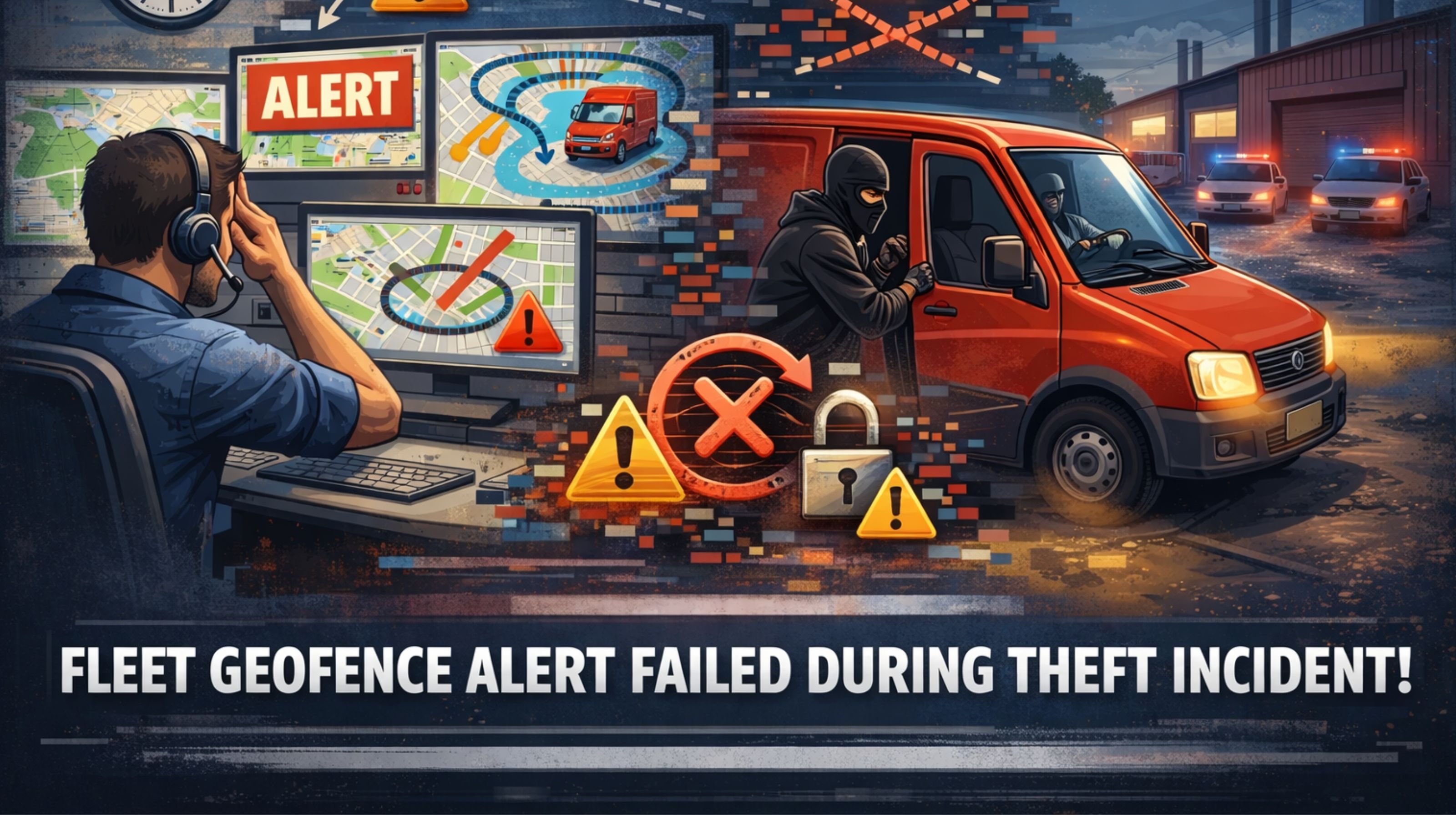
When a geofence alert fails during a theft, it's not some minor notification glitch. It's a critical breakdown. That digital boundary—the one that's supposed to be an instant tripwire—just went silent. You're left relying on delayed reports, or worse, just luck.
What Geofence Alert Failure Means for Live Fleet Security
In a live situation, this failure isn't about a missed email. You've lost the crucial first alert, the one that's supposed to kick your recovery protocols into gear. The system's entire job is to spot that boundary breach and fire off an immediate notification to your fleet management software and your team. When it doesn't, the thief's timeline just keeps rolling. Minutes turn into hours, and recovery gets that much harder.
Reality Check Under Real Vehicle Scale and Load
At real fleet scale, the failure often comes down to signal jitter. You know, in urban canyons or right near the geofence edge, where the device starts pinging location erratically. We've seen controllers show a vehicle just "dancing" on the map near a fence line, never triggering the alert. That flaw is bad enough, but it becomes catastrophic if a thief pauses for a second at the perimeter before taking off. The system has to be smart enough to tell signal noise from a real, sustained exit.
Common Mistakes and Escalating Risk Patterns
There's a big misunderstanding here: assuming all geofence alerts work the same way. A lot of managers will set one large geofence with a standard, say, 5-minute reporting interval. They don't realize that a stolen vehicle can be miles down the road before the next data point even confirms the breach. More often than not, it's this configuration gap—not a device failing—that escalates things from a nuisance to a major loss.
Decision Help: Tune, Redesign, or Replace the Monitoring Layer
The line here is pretty clear. If the failures are because of poor geofence design—like the size or sensitivity—or messed-up notification routing, you can probably tune and reconfigure your way out of it. But if the root cause is something like an inconsistent GPS fix in your devices, or if the data is just taking too long to get to the alert engine, then internal fixes stop working. At that point, the problem is the monitoring layer itself. The reliability of the whole geofencing alerts pipeline needs a redesign, or you need to replace it with a system that actually prioritizes real-time boundary integrity over basic tracking.
FAQ
q Why did my geofence not alert me when a vehicle was stolen?
a Most likely, it's a mix of a low reporting interval and signal drift right at the geofence edge. The device might not have reported a location firmly outside the boundary until well after the theft happened, which delays the whole alert engine.
q Can a geofence fail only sometimes, making it hard to diagnose?
a Absolutely. Intermittent failures are common and usually tied to specific spots, like urban areas with bad GPS visibility, or times when network latency is high. That inconsistency is actually a major red flag for deeper device or network problems.
q How many vehicles need to experience this before it's a system problem?
a Honestly? A single failure during a theft is a system problem. For non-critical alerts, if you're seeing unexplained geofence misses in more than 5% of your fleet during audits, the configuration or the platform itself is likely at fault and needs a review now.
q When should we stop trying to fix it and look for a new solution?
a When you've tuned the geofence sizes, sensitivity, and notification rules, and you're still getting missed alerts in known weak-signal zones, it's time. That means the core alert reliability of your current gps controller platform just isn't enough for high-security assets.


Comments
Post a Comment