Faulty Fuel Management System Warning Signs and Fleet Cost Escalation
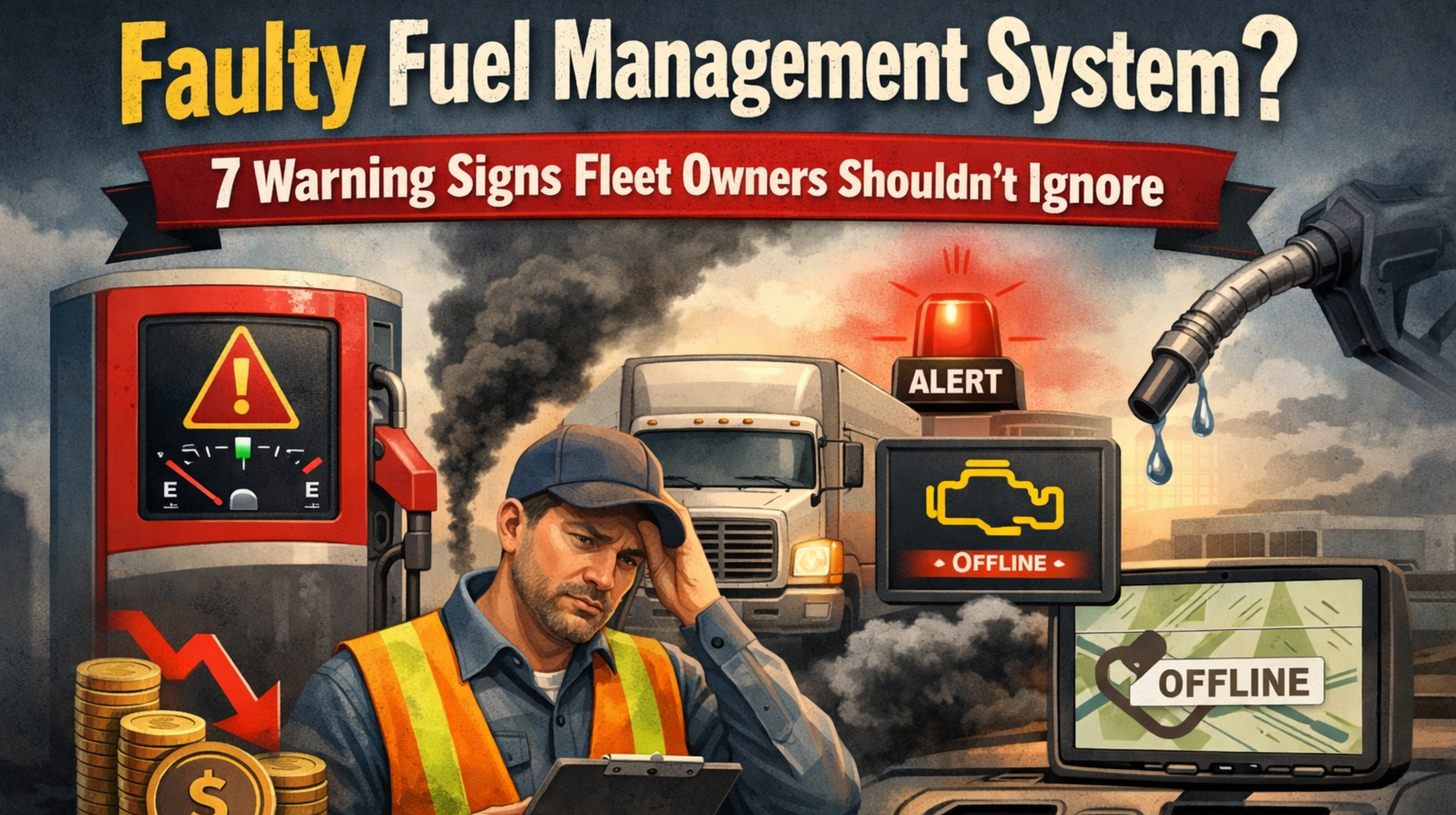
Faulty Fuel Management System Warning Signs and Fleet Cost Escalation
When your fuel management system starts failing, the first signs are subtle—a few liters off on a report, or a slight dip in expected MPG you might blame on traffic. Honestly, those are the early warnings of a bigger signal loss. If you ignore them, they lead straight to compliance gaps and cost leaks that can hit five figures. The problem isn't just a broken sensor. It's this growing gap between what your vehicles actually use and what your software says they use. That blind spot is what an audit is going to find eventually.
Clarity: What a Faulty Fuel System Means for Real-Time Fleet Tracking
A faulty system means your real-time dashboard looks confident, but it's wrong. You could see stable fuel levels for a vehicle that's just idling too much. Or you get a normal fuel performance report while your physical dipstick checks tell you something completely different. This breakdown messes with the foundational data for everything else—route planning, driver coaching—because you're basically making decisions based on a story that isn't true.
Reality Check: How Fuel Data Errors Multiply Under Real Fleet Load
At scale, small errors don't stay small. A 2% reporting inaccuracy across a 100-vehicle fleet burning 10,000 gallons a month? That's 200 gallons of fuel just gone, unaccounted for, every month. In practice, you see it as recurring "shrinkage" that maintenance can't pin down, driver reports that don't match the system data, and fuel card reconciliations that never quite line up with your software. Then you're stuck with manual workarounds that chew up management time.
Mistake: The Wrong Assumption That Leads to Total System Distrust
The biggest, most costly mistake is assuming it's just a hardware glitch—a single faulty sensor on one truck. Managers often go down the path of replacing sensors one by one, only to find the data problems stick around or pop up somewhere else. The real failure is usually a mix: aging telematics hardware that can't quite handle modern CAN bus protocols, calibration routines that aren't done right, and software that smooths over anomalies instead of highlighting them. The end result is you stop trusting any of your fleet data, and teams fall back to manual logs. That just makes the whole system investment pointless.
Decision Help: When to Tune, Reconfigure, or Replace Your Fuel Tracking
Here's the line: if you've recalibrated sensors, checked the vehicle comms, and updated the software, but you're still seeing consistent errors over 3-5% or getting persistent audit flags... then the core system itself probably isn't up to the job. At that point, patches won't work. The question changes from tuning to redesign. You need a platform where fuel data is built into the vehicle tracking and driver behavior analysis from the start, not just tacked on as a separate module. That's when looking at a modern gps controller platform stops being an optional upgrade and becomes an operational must-do, to finally close that compliance gap.
FAQ
q What is the most common first sign of a failing fuel management system?
a Usually, it's a growing difference between what your telematics software says you used and what you actually bought on fuel cards or at the pump. People often write it off as "topping off" or a card error at first.
q Can bad fuel data affect my DOT compliance or audit results?
a Yes, absolutely. Inaccurate fuel records can throw off your tax reporting (IFTA), raise questions during safety audits about hours-of-service, and create mismatches in your overall vehicle maintenance history.
q At what scale of fleet does a minor fuel tracking error become a critical problem?
a It becomes a serious financial and management headache once you get past about 15-20 vehicles. The cost of manually fixing bad data and the money lost to unseen theft or inefficiency will end up costing more than fixing the system properly.
q How do I know if I need a full system replacement or just a sensor upgrade?
a If the errors are random, only on specific trucks, and fixable with a recalibration, then an upgrade might do it. But if the errors are all over the place, inconsistent across different vehicle types, and they're messing up integrated data like route optimization or payroll, then you're looking at a system-level redesign.


Comments
Post a Comment