Engine Immobilizer Malfunction and Hidden Vehicle Recovery Risk
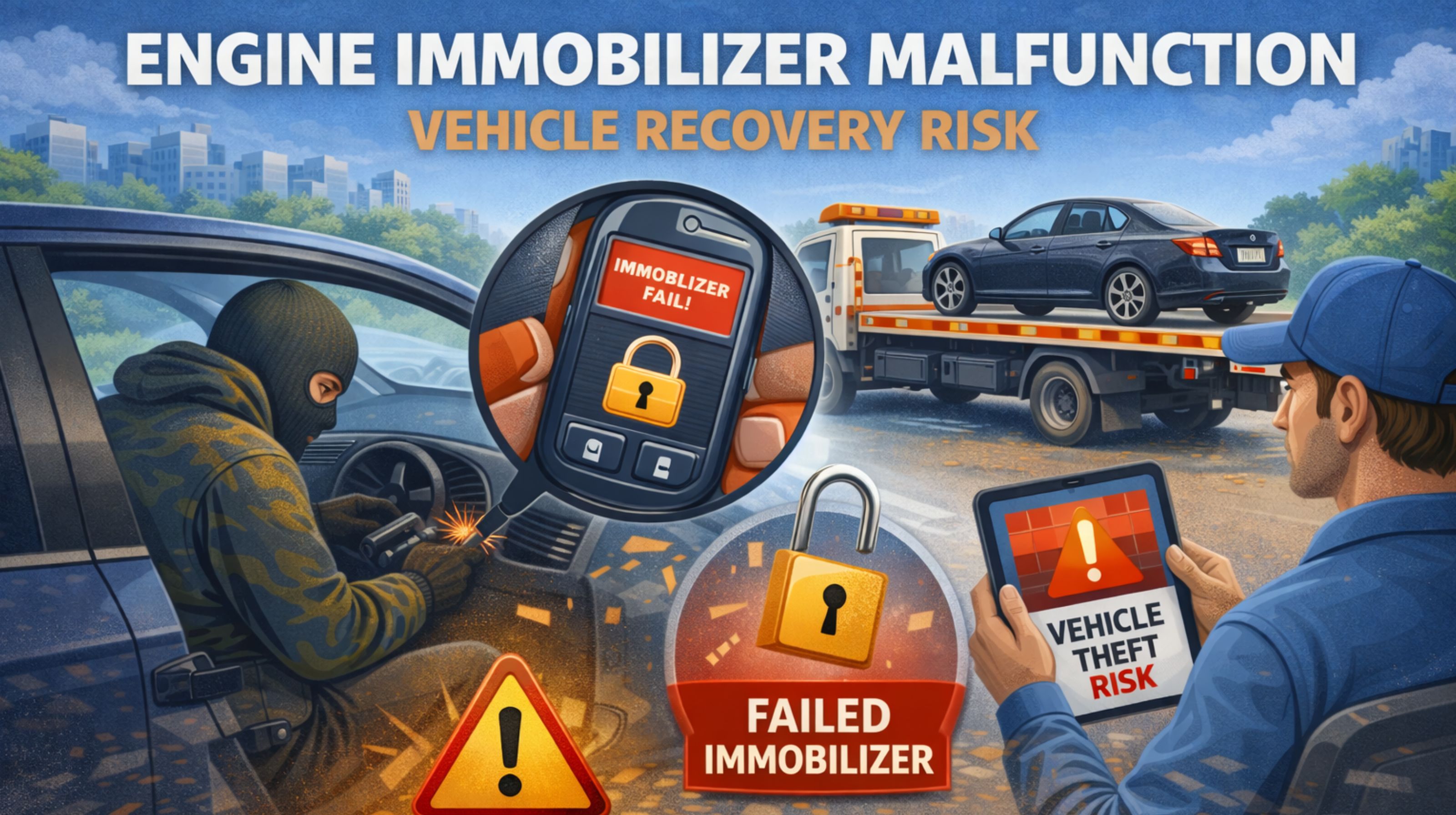
Engine Immobilizer Malfunction and Hidden Vehicle Recovery Risk
Here's the thing about a silent engine immobilizer failure: it's not just that you can't shut the vehicle down remotely. It actually creates this critical hole in your recovery plan. The vehicle keeps moving—stolen or misused—while your team is operating under the belief it's stopped. Honestly, the real danger isn't the failed command itself. It's the false confidence it builds into your whole security response.
What Immobilizer Failure Means for Live Fleet Security
In plain operational terms, an immobilizer malfunction means your central command loses its definitive "stop" authority over that specific asset. Let's be clear: this isn't just a feature outage. It's a breakdown in the assumed chain of control. You'll be watching the vehicle move on your real-time vehicle tracking map, but your immobilize command either comes back with a false "success" or just times out. That mismatch between what's on your dashboard and what's actually happening on the road is where the danger is.
Reality Check Under Real Fleet Pressure
And at scale, this problem just multiplies. One malfunctioning unit can tie up multiple recovery agents. They're all chasing a vehicle they think is immobilized at a last-known location, while it's actually miles away by then. We've seen it happen: fleets end up with delayed police reports because their system incorrectly confirmed the vehicle was stopped. That wastes the most crucial recovery windows. The real load from this isn't on the device; it's on your dispatch and coordination workflows, which get thrown into chaos.
Common Failure Patterns and Wrong Assumptions
The most costly assumption, hands down, is thinking a "command sent" status equals "command executed." In reality, failures often happen in that handshake between the telematics gateway and the vehicle's own CAN bus—sometimes due to a firmware mismatch or even a voltage sag. What happens next is teams escalate by just repeatedly sending the immobilize command, not realizing the device is already in a fault state. That can delay proper diagnostics for ages and create a mess of audit trail discrepancies, which is a nightmare for compliance reports.
Decision Help: Tune, Reconfigure, or Replace the Unit
So, where's the line? The decision boundary is pretty clear. If the malfunction is down to a configuration error or a one-time network glitch, then tuning the command protocol or pushing a firmware update might be enough. However—and this is a big however—if the unit is intermittently failing the immobilizer circuit test or showing related faults in the diagnostic log, then internal fixes just won't cut it. At that point, replacement is really the only reliable path to restore guaranteed security. A more contextual platform, like gps controller, would be designed to highlight this diagnostic state upfront, to stop you from wasting time on troubleshooting that's going nowhere.
FAQ
q What does an engine immobilizer actually do?
a It's basically a relay that interrupts a critical circuit—think fuel pump or starter—when triggered remotely. It physically prevents the engine from running or starting.
q Can a GPS tracker still work if the immobilizer fails?
a Yes, and that's exactly the hidden risk. The IoT asset monitoring for location often runs independently. So you can still see the movement, but you've lost all control. That creates a really false sense of security.
q What's the biggest compliance risk with a malfunction?
a An inaccurate audit trail. If your system logs an immobilize command as successful but the vehicle is moving, it creates a discrepancy that can straight-up violate insurance or regulatory requirements for secured assets.
q How many immobilizer failures signal a systemic problem?
a Look, more than one sporadic failure in a 90-day period across a fleet batch often points to a firmware or hardware lot issue. It's usually not just isolated incidents. That kind of pattern demands a batch review and potentially a redesign of the security protocol itself.


Comments
Post a Comment