Emergency Fleet GPS Tracking Failure and the Response Time Risk
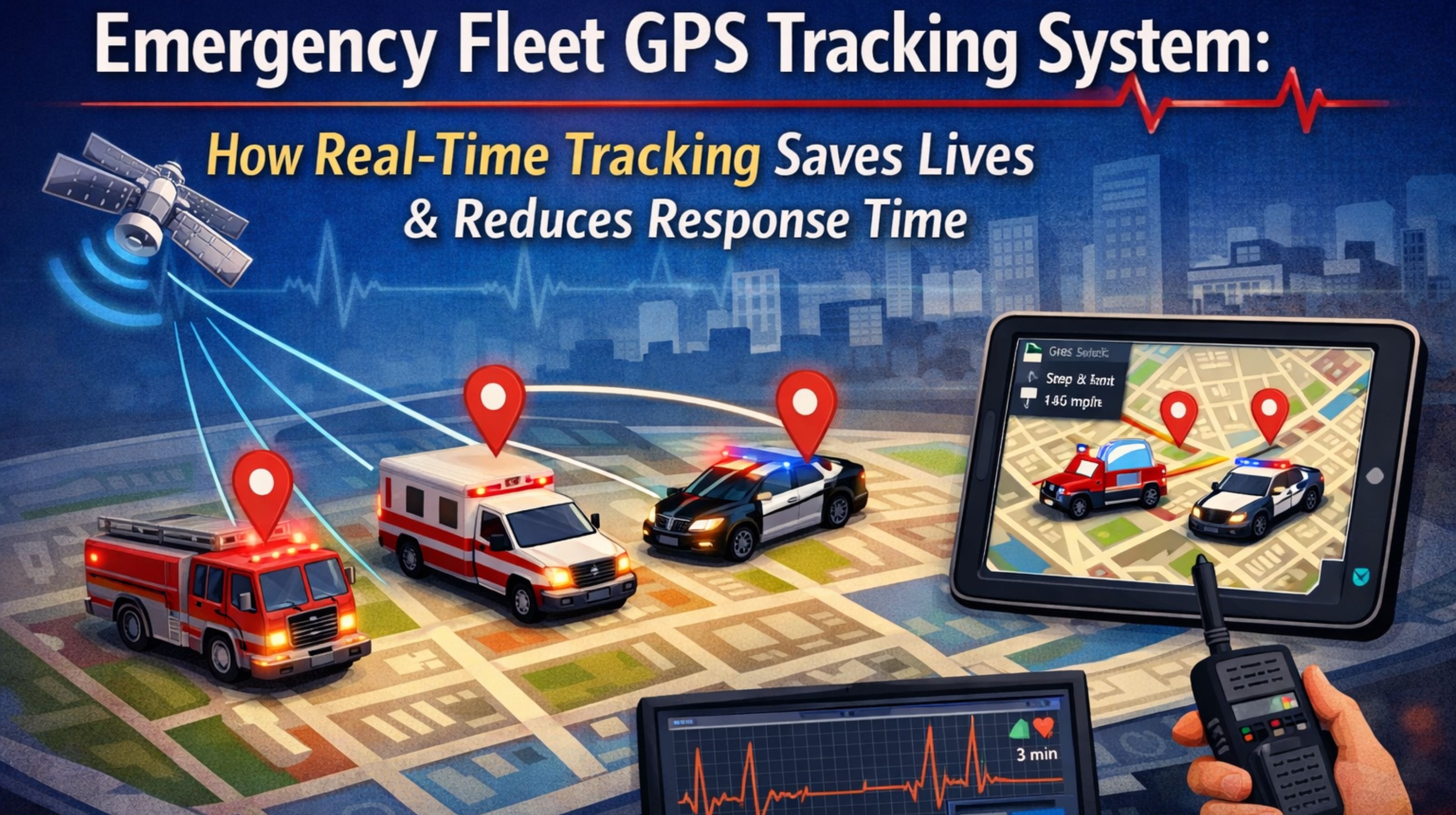
Emergency Fleet GPS Tracking Failure and the Response Time Risk
When an emergency fleet's real-time tracking goes down, calling it a data glitch misses the point—it's a direct threat. That gap between a moving dot on a map and what you can actually *do* is where seconds vanish. Usually because of old hardware, or a clogged network, or maybe just not grasping what "real-time" really means when everything's hitting the fan. I've seen it happen: geofence alerts for a hospital arrival coming in a minute and a half late, all because the device's update rate was set wrong for downtown streets.
What Real-Time Tracking Failure Means for Emergency Fleets
For crews on the ground, a failure means dispatchers lose the picture. You can't reroute units around a new crash or traffic, and the whole coordination effort just falls apart. The telltale sign? A dispatcher staring at a vehicle icon that hasn't moved, while the radio crackles with a unit calling in from somewhere else entirely. It's dangerous confusion. This goes way beyond map accuracy—it's about the whole command and control workflow falling apart when it matters most.
The Reality Under Emergency Load and Scale
When a big incident happens, everything gets stressed. Cell towers jam up, GPS signals bounce off skyscrapers, and the data from your fleet spikes. Consumer-grade trackers buckle under that. The failure looks the same every time: devices start buffering location pings instead of sending them, creating a lag of two, even five minutes. At that point, "real-time" is a fantasy. One thing people don't always think about—a lot of these units are built to save battery when the engine's off, which can accidentally hide whether a unit is actually available or not.
Common Mistakes That Escalate Tracking Risk
The most dangerous assumption is that any GPS device will give you reliable, real-time data for emergency routing. Too often, fleets use asset trackers meant for checking in once a month, not for second-by-second awareness. The data lag that creates can be catastrophic. Another big one is forgetting about the cellular network itself. If a device is on a cheap, deprioritized data plan, it'll drop out during peak congestion—exactly when you need it. That doesn't just slow you down; it blows a hole in your response time audits.
Decision Help: Reconfigure, Redesign, or Replace
Here's a clear line: if your tracking is routinely more than 30 seconds behind during normal ops, tweaking settings won't cut it. You're left with a choice: replace all the hardware with proper dual-modem, high-sensitivity units, or redesign the whole system to bake tracking right into the dispatch software. When fiddling with report intervals stops helping, the problem is usually basic—the devices just aren't built for emergency-grade real-time fleet management. At that scale, you often need to bring in a specialist, like a gps controller, to get life-critical tracking back online.
FAQ
q What is considered "real-time" for emergency vehicle tracking?
a For life-or-death response, real-time means getting a location update in under 10 seconds, and it has to work 95% of the time no matter what the network's doing. Standard fleet tracking, with its 30 to 60 second updates, is just too slow for emergency dispatch to work dynamically.
q How does network congestion affect emergency GPS tracking?
a When something big happens, public cell networks get swamped. If your devices don't have a dedicated, priority data line, they'll start losing data packets. Your tracking map freezes. It's a classic failure point that normal testing won't always catch.
q Can old GPS units be upgraded for better real-time performance?
a Usually not. Older hardware often doesn't have the modern chips to lock onto signals fast in a city, and they might not even support the right data protocols for low-latency reporting. Trying to upgrade just some of them can make your fleet's data inconsistent.
q When should an emergency fleet replace its entire tracking system?
a You know it's time when the tracking failures line up with missed response time targets or audit problems. If you're constantly on the radio just to confirm locations your software should be showing you, the system has failed. At that point, the only real fix is a full swap to emergency-proven hardware, tightly integrated with your dispatch software.


Comments
Post a Comment