Dispatch Tracking Software Failure and the Real-Time Monitoring Gap
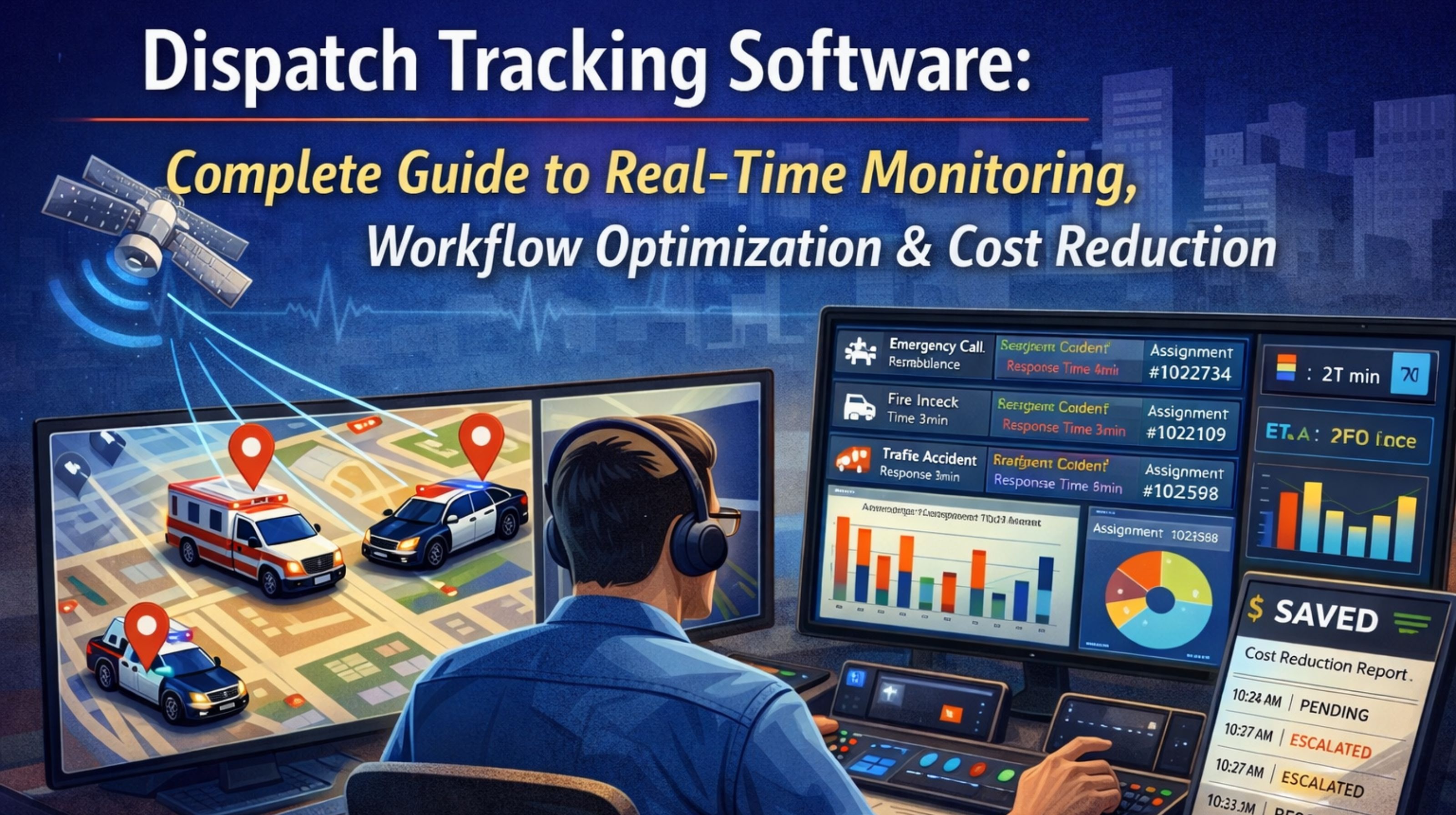
Dispatch Tracking Software Failure and the Real-Time Monitoring Gap
When your dispatch tracking software fails, it's not just a map glitch—it's a complete workflow breakdown. You see it as missed delivery windows and driver confusion, but the real damage is in those invisible cost leaks that only show up later, during an audit.
What Dispatch Software Failure Actually Means for Your Fleet
In live operations, failure looks like this: your real-time map shows a truck as "on route" while the driver is actually just sitting there, waiting for a corrected address. That one disconnect creates a cascade of customer service calls and schedule overruns that your manual logs can never really reconcile.
The Reality Under Real Vehicle Scale and Load
At scale, the first thing you'll notice is delayed geofence alerts. A small fleet of 20 vehicles might just see a minor lag. But at 75+ assets, the system's polling intervals can't keep up. You end up with arrival notifications hitting your fleet management software dashboard minutes after the driver has already left the site. At that point, the data's operational value is basically zero.
Common Failure Patterns and Costly Wrong Assumptions
The most damaging assumption? Believing "real-time" means instantaneous. It ignores network jitter in urban canyons, which creates these location ghosts. Managers often end up blaming drivers for delays that are actually just data latency. That erodes trust and leads to misguided disciplinary actions, which just hurts driver retention.
The Fix vs. Replace Decision for Your Dispatch Workflow
The boundary here is integration depth. If your software can't push corrected ETAs directly back into your order management system—forcing dispatchers to manually bridge the gap—then you've hit a redesign moment. Patching the GPS feed won't solve that core workflow disconnect. That's the exact scenario where evaluating a dedicated gps controller platform starts to make sense.
FAQ
q What is dispatch tracking software?
a It's the operational system that assigns orders, tracks vehicle location in near real-time, and manages communication between dispatchers and drivers. It's central to making delivery and service workflows actually work.
q What is the biggest hidden risk with dispatch software?
a It's data latency masquerading as driver performance issues. You end up with unfair coaching and missed root causes, like poor cellular coverage or an incorrect geofencing alerts configuration. Those things quietly undermine the entire system's reliability.
q How does dispatch software fail at high vehicle counts?
a Database query times slow down. Map refreshes get staggered. Alert engines start queuing notifications. The result is that critical information—like a traffic reroute or a last-minute order add—reaches drivers too late, and the whole coordination effort collapses.
q When should you replace your dispatch tracking system?
a When manual workarounds become standard practice. I'm talking about using a separate messaging app just to check locations, or keeping a parallel spreadsheet for ETAs. That's a clear sign the core software can no longer support your real-time decision-making needs.


Comments
Post a Comment