Dashcam Footage Fails to Protect You When Insurance Needs Legal-Grade Video
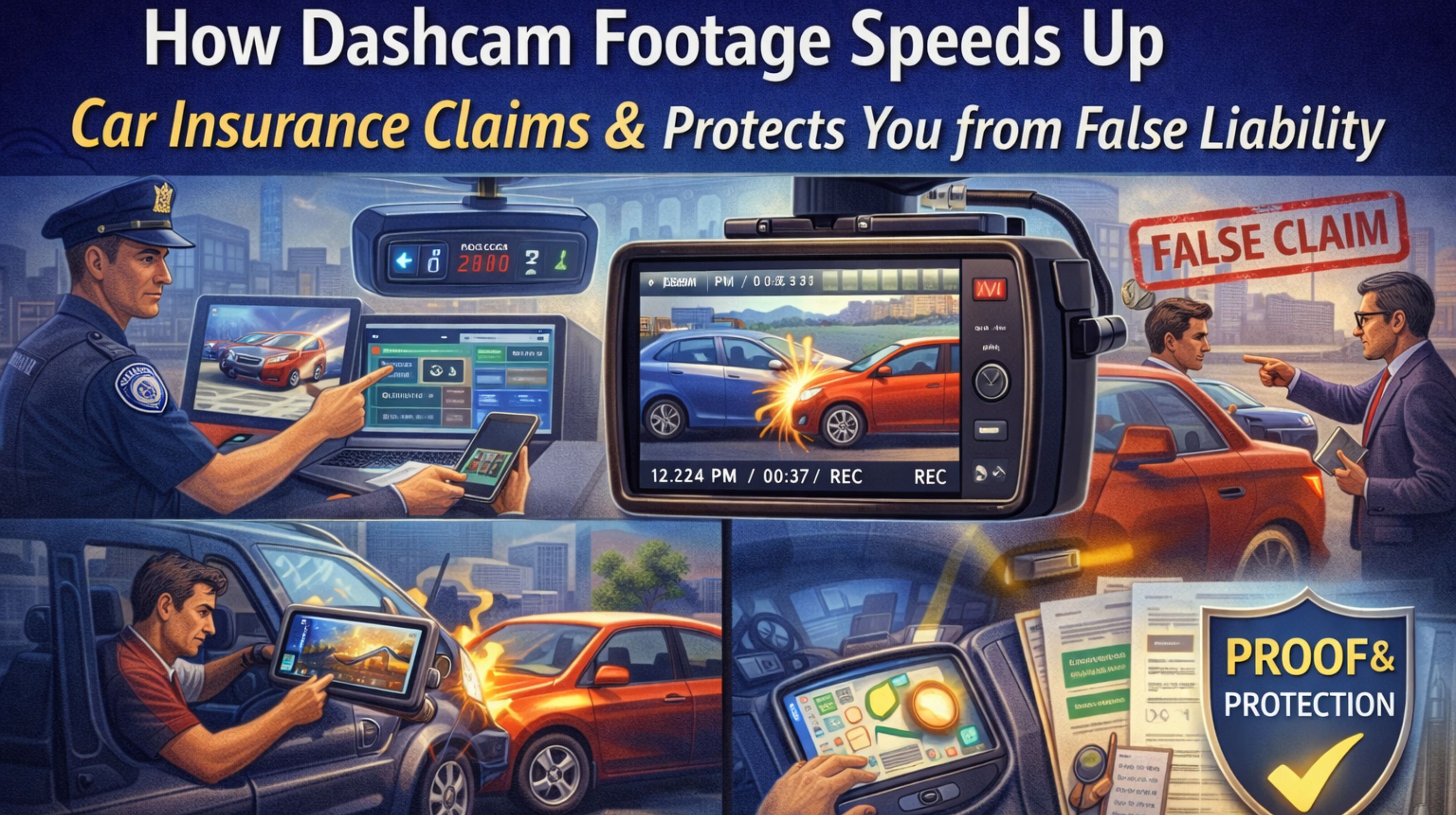
Dashcam Footage Fails to Protect You When Insurance Needs Legal-Grade Video
You'd think the video is enough, right? But insurers toss out dashcam footage all the time—missing timestamps, corrupted GPS logs, plates you can't read. And suddenly you're on the hook. The real problem usually isn't the camera itself. It's everything that happens to the data between your windshield and the insurance adjuster's desk.
What "Evidence" Actually Means for a Fleet Insurance Claim
For a fleet claim, evidence isn't just a video clip. It's a complete chain: continuous GPS location, video that's synced up and clear, and a timestamp that never breaks. One single gap can ruin it. Like a dashcam that loses power for a second during a hard brake and misses the crucial moments before impact. We've literally seen claims denied over that. A clear-cut case turns into a messy "he said, she said" 50/50 split.
The Reality of Scaling Dashcam Evidence Across 50+ Vehicles
When you're dealing with real fleet scale, the manual approach falls apart. Imagine a manager trying to pull SD cards from multiple trucks after an incident—it takes hours, you miss deadlines, it's a mess. The critical detail is whether your real-time vehicle tracking setup can automatically flag an incident, encrypt the clip, and shoot it to the cloud, skipping the SD card shuffle entirely. If it can't, your evidence is probably getting lost along the way.
Common Mistakes That Invalidate Your Dashcam Defense
The biggest mistake is thinking any video counts as evidence. It doesn't. Insurers and courts need the metadata baked into the file—speed, exact coordinates, G-force readings. A lot of folks use consumer-grade dashcams that don't capture this, so even with footage, you're stuck in a "he said, she said" loop. That one flaw can blow up a simple fender-bender into a full-blown liability headache.
Decision Help: Integrate or Replace Your Evidence Workflow
It really comes down to automation. If your team is still handling videos manually, you need to integrate those dashcams with a telematics platform that auto-uploads clips. If your current hardware is too old to integrate? Then you probably need to replace it. You can only jury-rig internal fixes for so long before you need a provable, automated audit trail for compliance. A proper fleet management software layer isn't just helpful here—it's essential for evidence that actually holds up.
FAQ
q What is the most common reason insurance rejects dashcam video?
a Usually it's missing or messed-up timestamps and GPS data. That break in the evidence chain makes them question if the video was tampered with or is even accurate.
q Can a cheap dashcam protect my fleet from false claims?
a Honestly, no. Budget models often have unreliable G-sensors, corrupt files when they lose power, and can't connect to telematics for automatic uploads. They just create gaps in your evidence.
q How many vehicles before manual video management becomes a risk?
a Once you're past maybe 10 or 15 vehicles, the risk really spikes. The chance of losing a clip, submitting it late, or mishandling it gets too high. You need an automated system that pulls clips right from the GPS tracking device.
q When should I redesign my entire video evidence system?
a Usually after a disputed claim or a tough audit where your manual process failed you. The move is to a unified platform where video, location, and sensor data come together as one stream—that's a core part of a modern GPS controller setup.


Comments
Post a Comment