Why Cold Chain Sensor Batteries Fail (And What You Actually See)
Why Cold Chain Sensor Batteries Fail (And What You Actually See)
When a temperature sensor's battery dies mid-shipment, it's rarely a simple "off" switch. The failure patterns are specific, costly, and honestly, you usually don't understand them until you've already lost a pallet of product.
What "Battery Failure" Really Means in a Refrigerated Truck
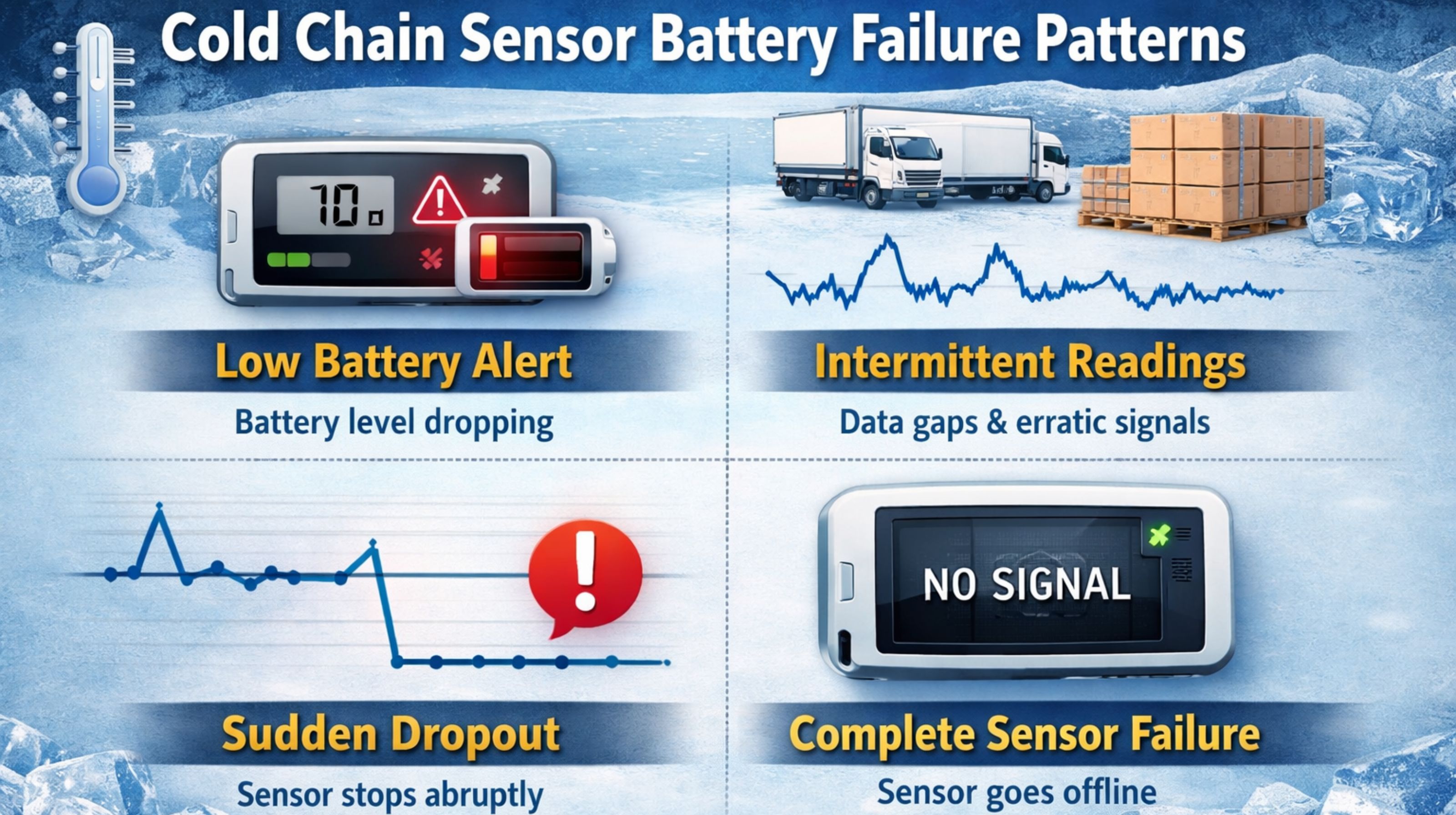
In practice, it rarely means the sensor goes completely dead. What you'll actually see first are data gaps—the device just misses its scheduled transmission. Then come the erratic temperature readings that don't match anything else in the load. The voltage drop in the cold doesn't kill the cell outright; it cripples the radio first, which is the whole point of the thing.
The Reality of Field Replacements and Missed Alerts
Most teams assume a low-battery alert gives you plenty of time for a swap. The reality on the ground is different. In a busy distribution center, that alert gets missed. Or it gets deferred to the next maintenance cycle, and by then the sensor is already on a truck somewhere, starting to act up. I've seen it: sensors with "15% battery remaining" alerts got put back into service for what was supposed to be a quick local run, only to get routed onto a multi-leg journey.
The Costly Misunderstanding About Battery Specifications
A common and expensive mistake is taking the battery's rated temperature range at face value. A battery rated for -20°C might technically still operate, sure. But its actual capacity can be half of its room-temperature rating. So teams install sensors with batteries that are technically "in spec," but they don't account for that massive reduction in real operational life. That's what leads to the premature failure.
When to Worry About Your Sensor Fleet's Power
This pattern matters most when your shipments are long-haul or multi-modal, where you physically can't get to the sensor for a replacement. If your logistics are just short, predictable loops with frequent dock returns, you can probably manage with reactive swaps. The real decision point is volatility: if your routing or storage times change often, that predictable battery failure pattern becomes your biggest blind spot.
FAQ
Can you just use a battery with a higher capacity?
Often, yes, but it increases the sensor's size and cost. The more practical limit, though, is the device's own power management. That circuitry isn't always designed to handle the sudden voltage recovery when a frozen battery warms up again.
Do all sensor brands fail the same way?
No. Cheaper sensors tend to fail more abruptly—you just get a total data blackout. Higher-end units with better power regulation will degrade more gracefully, giving you those erratic readings as a final warning.
Is monitoring battery voltage remotely reliable?
It's a guide, not a guarantee. The voltage reading you get via telemetry is an estimate. The only true test is the sensor's ability to transmit a strong signal on schedule from inside an actual cold environment, which is pretty hard to simulate in a warehouse.
What's the one thing most logistics managers ignore?
The discharge curve. Batteries don't drain in a straight line. They hold voltage steady for maybe 80% of their life, and then they drop off a cliff. If you're only checking the reported percentage, you're completely missing the steep part of the curve that happens in the cold.


Comments
Post a Comment