When Is It Actually Safe to Remotely Kill a Vehicle's Engine?
When Is It Actually Safe to Remotely Kill a Vehicle's Engine?
Remote engine immobilization is a powerful tool for fleet managers and security teams, but the decision to use it carries real-world consequences that go far beyond the click of a button.
What Remote Immobilization Really Means on the Road
In practice, this isn't just disabling a starter; it's a command that cuts fuel or ignition to a running engine, bringing a multi-ton vehicle to a forced stop. I've seen systems that trigger a gradual power loss versus an abrupt stall, which is a critical operational detail often buried in the manual.
The Standard Safety Protocol Most Companies Follow
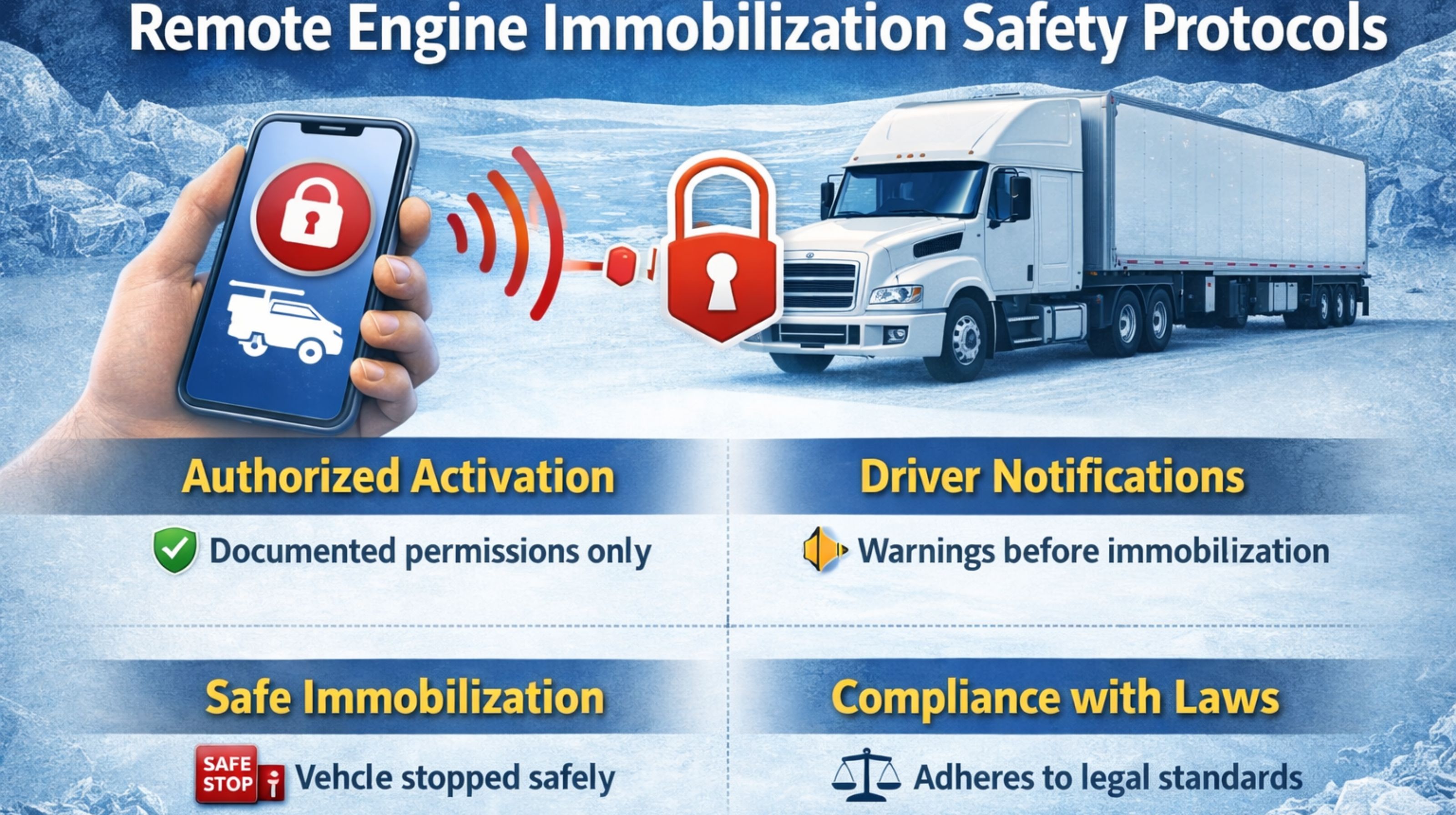
The common playbook involves a multi-step verification: confirming the vehicle's location via GPS is safe (not on a highway bridge or railroad crossing), checking it's stationary or moving very slowly, and ensuring the driver is notified via an in-cab alarm first. Honestly, the "safe location" check is the most frequently debated and subjective part of the process.
The Critical Risk Everyone Overlooks
The biggest misunderstanding is treating this as a simple security tool. The real risk isn't just stranding a driver; it's creating a sudden road hazard. A truck losing power in a moving lane of traffic can cause a chain-reaction accident, creating liability that far outweighs the value of a recovered asset. I've reviewed incidents where the protocol was followed, but the GPS lag meant the vehicle was 100 feet further into an intersection than the system showed.
Deciding to Use Remote Kill: A Practical Framework
This makes sense only in clear, non-moving theft scenarios—like a vehicle idling unattended in a parking lot. It doesn't make sense during a pursuit or if the driver is suspected of being in distress. The trade-off is always immediate control versus potential for catastrophic collateral damage. A practical detail most ignore is having a direct line to local law enforcement to coordinate before activation, turning a blind remote action into a managed operation.
FAQ
Can you remotely immobilize a vehicle at high speed?
You should never intentionally do this. Even if the system allows it, the safety protocols should be designed to prevent it due to the extreme danger of a sudden loss of control.
What happens to power steering and brakes when the engine dies?
You lose power steering assist immediately, making the wheel very hard to turn. Brakes remain but without engine vacuum assist, the pedal becomes much harder to press, requiring significantly more force to stop.
Do drivers know if their vehicle has this capability?
This is a major point of contention. In many fleets, drivers are simply told the vehicle has tracking, not that it can be remotely disabled, which can create serious trust and labor issues.
What's the fail-safe if the immobilization command fails?
A robust system will have a layered approach, but the ultimate fail-safe is human judgment. There should always be a person with the authority to abort the command if the situational picture changes.


Comments
Post a Comment