When Every Route Alert Feels Like a False Alarm
When Every Route Alert Feels Like a False Alarm
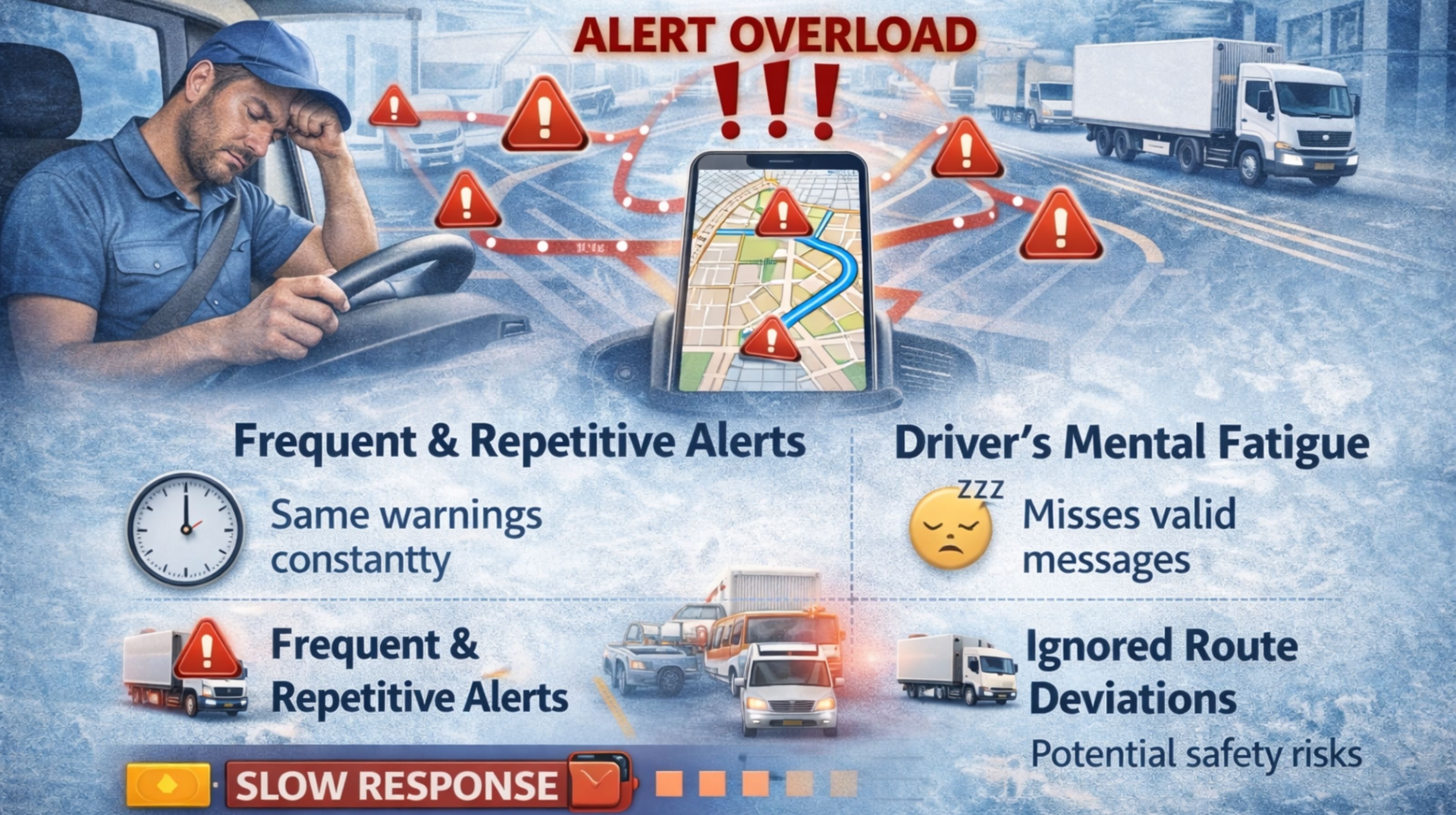
Your drivers' screens are constantly flashing, and your managers are ignoring the pings. This isn't a tech failure; it's alert fatigue, and it's making your delivery fleet less safe and efficient.
What "Deviation Alert Fatigue" Actually Means on the Road
In practice, this means your system is flagging every minor slowdown, unexpected stop, or reroute as a critical event. I've seen drivers develop a dangerous habit: they hear the alert chime, glance at the screen, see it's just traffic, and immediately dismiss it without a second thought. The system cries wolf so often that the real wolf gets ignored.
The Reality of Managing Constant Alerts
What usually happens is a two-tiered system of neglect. Fleet managers, bombarded with notifications, start to mentally filter them out, often missing the one alert that signals a genuine breakdown or safety incident. Meanwhile, drivers learn which alerts have no real consequence and simply tune them out, creating a major gap in real-time oversight.
The Hidden Risk Everyone Misses
The biggest misunderstanding is thinking more alerts equal more control. The opposite is true. When everything is flagged as high priority, nothing is. A common practical detail teams ignore is the "re-alert" setting—the system that sends a second or third ping if the first is ignored. This doesn't solve fatigue; it amplifies it, training your team to resent the tool meant to help them.
When to Use Alerts and When to Silence Them
This makes sense for true deviations: unauthorized route zones, extended unscheduled stops, or drastic ETA changes. It doesn't make sense for routine urban traffic, planned driver breaks, or minor GPS drift. The trade-off is clear: you must accept a small amount of unsupervised variability to protect attention for the major, costly exceptions. Set parameters for speed, geofence breaches, and stop duration that reflect real operational risks, not perfect plan adherence.
FAQ
What's the first sign my fleet has alert fatigue?
Look for high dismissal rates with no follow-up action. If 95% of alerts are closed within seconds and never reviewed, your team has learned they're mostly noise.
Should I just reduce the number of alerts we send?
Not just reduce—categorize. Create a strict hierarchy. A minor reroute might be a silent log entry, while entering a restricted zone triggers a mandatory driver acknowledgment and manager call.
How do I get drivers to take alerts seriously again?
You have to rebuild trust. Start by involving them in setting the alert rules. If they know an alert only triggers for a genuine, reviewed issue (like a known traffic blackspot), they'll pay attention. Silence the trivial stuff first.
Can better route planning fix this?
Only partly. Even the best plan meets reality. The fix is in the system's intelligence, not just the plan. Your software should distinguish between a truck stuck in a queue and one that's genuinely off-route, using more data than just location.


Comments
Post a Comment