What you're really deciding about driver fatigue detection calibration
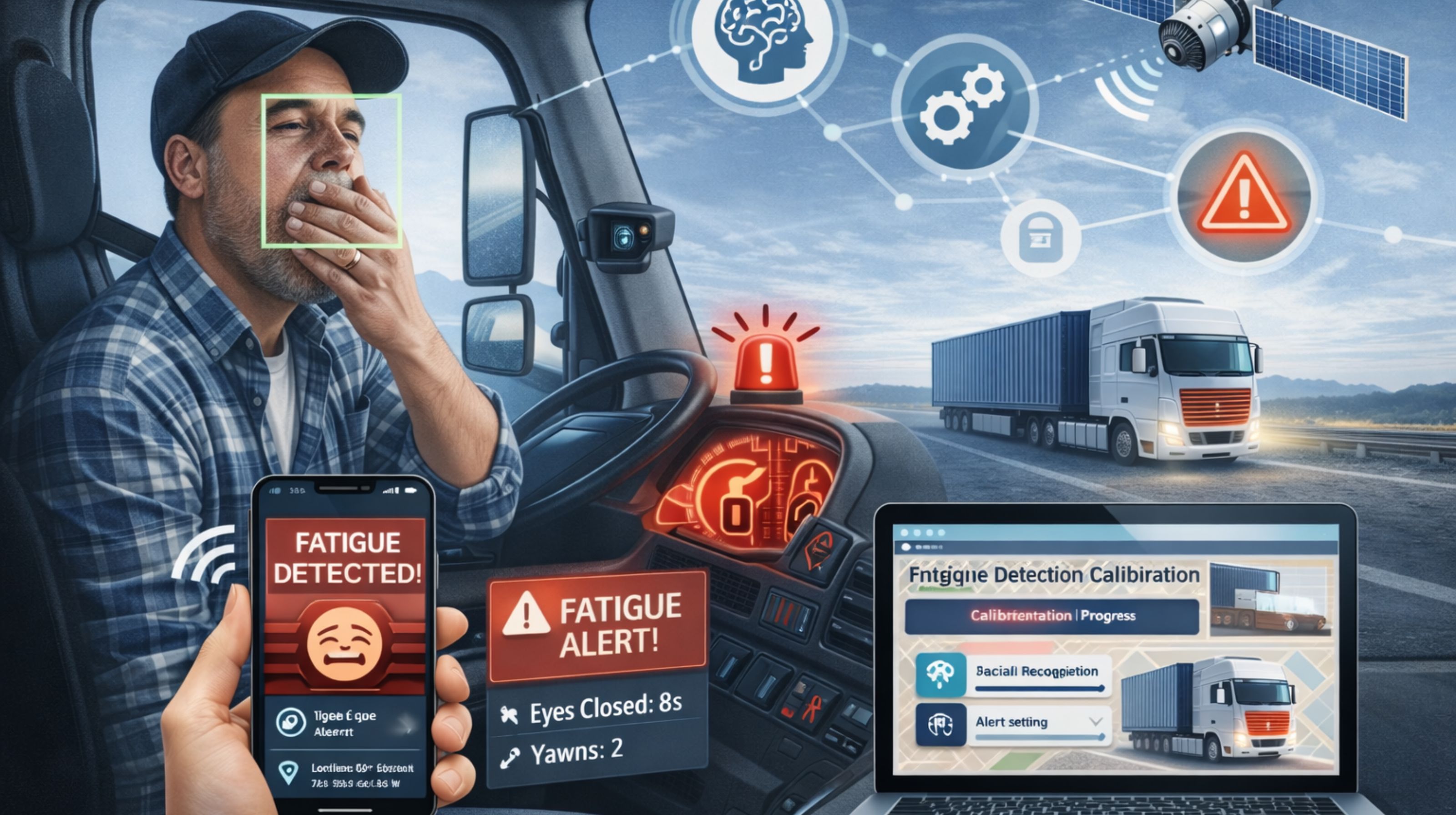
What you're really deciding about driver fatigue detection calibration
When you're looking at fatigue detection systems for long-haul trucks, you're not just buying a camera. You're deciding how to manage a system that's going to constantly judge your drivers' alertness, often in terrible lighting and on roads that feel more like washboards.
Calibration means aligning the system with the real driver
In practice, calibration is about teaching the camera where a specific driver's face and eyes are. You have to account for seat position, their height, and how they slump over a 10-12 hour shift. It's less about hitting a technical spec and more about locking down a reliable baseline for that particular person in that particular cab.
The reality is a battle against false positives
Ask most fleets, and the biggest headache isn't missing drowsiness—it's dealing with false alerts. Sunglasses, checking a side mirror, even a driver's unique face can set it off. You end up tuning the system's sensitivity for the real road, not the perfect conditions of a lab.
The common mistake is setting it and forgetting it
A major misunderstanding is treating calibration as a one-and-done event. The truth is, a calibration done in a quiet depot can drift. Weeks of vibration, a new driver, or even the changing angle of seasonal sunlight through the windshield can throw it off, quietly chipping away at its accuracy.
When this calibration effort makes sense for your fleet
This whole intensive process is worth it if you have consistent drivers in dedicated trucks on predictable long routes. It makes far less sense for short-term rentals or teams where drivers are constantly rotating. In those cases, the calibration baseline is practically useless.
FAQ
How often does a fatigue detection system need recalibrating?
It depends on what changes, not the calendar. You should recalibrate after a major repair to the windshield or camera mount, when a new primary driver takes over, or if drivers start complaining about a lot more false alerts.
Can a driver "trick" the system during calibration?
They can, which is why the process matters. If a driver slouches or wears a hat during setup, you get a flawed baseline. The best practice is to have someone supervise that initial calibration to make sure the driver is in their normal, attentive driving position.
Does calibration differ between day and night driving?
The system's infrared lights handle the dark, but the calibration itself is usually done in stable light. A practical step a lot of people skip is checking the system's logs after a driver's first few night shifts, just to make sure the eye-tracking is still holding up.
What's the biggest limitation of these systems after calibration?
It's a core trade-off: sensitivity versus annoyance. Even a perfectly calibrated system set for maximum safety will still give you some false alerts. And the real limitation is that it only measures physical signs, like eyelid closure. A driver can be staring wide-eyed but be completely zoned out mentally.


Comments
Post a Comment