What Your Construction Machinery Idle Reports Are Actually Telling You
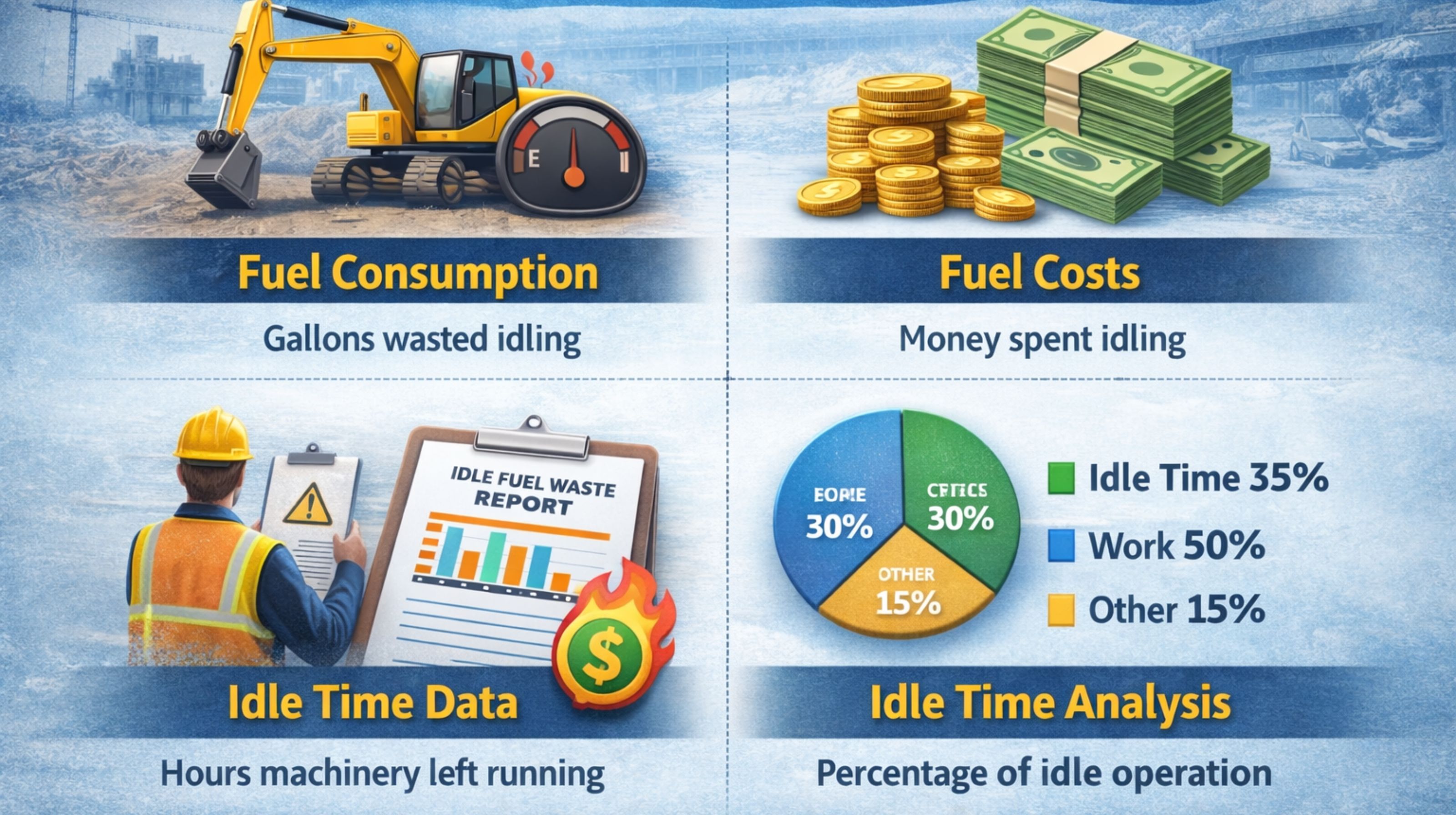
What Your Construction Machinery Idle Reports Are Actually Telling You
You're staring at a spreadsheet full of idle hours and fuel burn percentages, probably wondering if this data is even worth the headache. But here's the thing—it's not just numbers. It's a direct line to your project's hidden fuel costs and the silent wear on your equipment.
Idle Reports Are More Than Just a Fuel Gauge
In the real world, these reports translate engine run-time into a story about your jobsite logistics and, frankly, operator habits. I remember seeing a report where a single loader idled for 40% of a 10-hour shift. It wasn't working; it was just the designated "warm seat" for crews during breaks. The report showed the symptom, but the reality was a workflow issue nobody had spotted.
The Real Cost Isn't Just the Fuel You Burn
It's easy to fixate on the immediate diesel cost. Most managers do. But the bigger hit usually comes later, from accelerated maintenance. Continuous low-load idling is brutal on DPFs and gums everything up with carbon. That repair invoice six months down the line for a forced regeneration or injector cleaning? That's where the idle report's warning actually cashes out.
Misreading "Necessary" vs. "Convenience" Idling
We often fall into the trap of writing off all idling as operationally necessary. The data usually tells a different story. For instance, if you see consistent high idling during the first and last hour of shifts, that's typically warm-up and cool-down periods stretching way beyond the manufacturer's recommendations. It's a convenience habit that somehow became a costly standard.
When to Act on Idle Data and When to Ignore It
Use these reports to target specific machines with consistently high percentages—say, anything over 30%—and specific shifts. Ignore the occasional one-day spike; that could be a weather event or a concrete pour delay. The real insight is in the trend. If your data shows that an APU could cut a truck's idling in half, the payback math gets pretty clear. But if the data is just uniformly low across the board? Your effort is probably better spent elsewhere.
FAQ
What is considered a "high" idle percentage for construction equipment?
For non-auxiliary machines like excavators or loaders, anything consistently above 30% should raise a flag. For long-haul dump trucks, it can be higher, but that's when you start asking if an APU investment makes sense.
Can idle reporting systems be inaccurate?
They can be, especially if the system only uses a throttle position sensor or a simple timer. The better ones use a mix of RPM, engine load, and GPS movement to tell true working idle apart from just parked with the engine running.
How do I get operators to buy into reducing idle time?
Frame it around machine reliability, not policing. Explain that cutting excessive idling means fewer downtime events for filter changes and a lower chance of a breakdown in the trench. Show them the data—often, they just don't realize the habit.
What's the first step after identifying a problem machine?
Don't just fire off a memo. Go to the site and watch. The report tells you the "what"; you need to find out the "why." It could be a procedural bottleneck, a lack of shade requiring AC use, or just a missing policy. The fix is always in the context.


Comments
Post a Comment