What You Actually Need to Integrate an AIS 140 Emergency Button
What You Actually Need to Integrate an AIS 140 Emergency Button
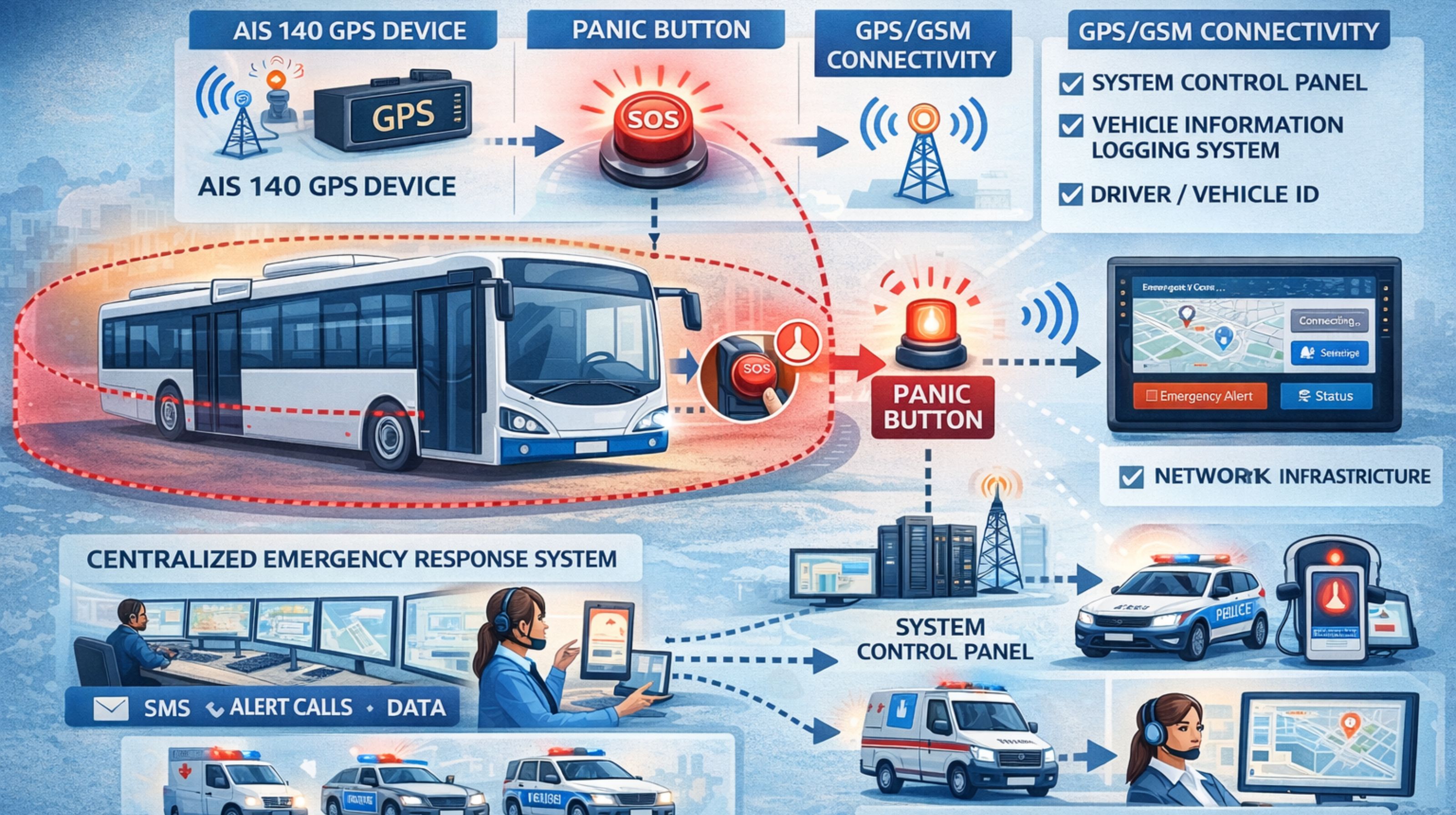
So you're looking at AIS 140 certification, and the emergency button seems straightforward. It's not. It's more than wiring a switch; you're building a failsafe communication chain that has to work when everything else is going wrong.
What the Emergency Button Integration Really Means
On paper, integration means connecting a button to the certified Vehicle Tracking Unit (VTU) to send a prioritized alert. In practice, the button itself is usually solid. The real trouble starts with the wiring harness, or how the VTU's firmware actually handles that signal. That's where things tend to fall apart.
The Reality of Getting It Certified
Everyone focuses on passing the lab test. What they miss is the environmental testing. Your button assembly has to survive vibration, moisture, and crazy temperature swings without failing silently or triggering false alarms. I've seen setups pass the functional check, only to fail because the mounting bracket cracked during vibration tests. That's the kind of detail that costs you months.
The Common Misunderstanding About "Panic" Mode
Here's a major risk: thinking the emergency alert is just another high-priority data packet. The protocol says it must interrupt *all* other communications. A common mistake is developers queuing it up. If the VTU is busy sending other telematics data when the button is pressed, that "high-priority" message can still be delayed. And in an emergency, any delay is a failure.
When to Build In-House vs. Use a Certified Module
Building from scratch only makes sense if you're manufacturing the whole VTU and need absolute control over every component. For most people—fleet management companies or vehicle OEMs—the smarter path is sourcing a pre-certified VTU with the button circuit already validated. You trade some customization for avoiding months of brutal requalification cycles. It's almost always worth it.
FAQ
What are the exact signal requirements from the button to the VTU?
It needs a clean, debounced digital input to a dedicated GPIO pin—usually a ground pulse. The VTU firmware then has to be explicitly configured to see that as *the* emergency trigger. Get the debouncing wrong, and you'll have problems.
Does the button need its own power source?
No, it's typically powered by the VTU. But the circuit absolutely must include protection against short circuits and voltage spikes from the vehicle's electrical system. That's a surprisingly common point of failure.
What data is sent in the emergency alert?
The VTU has to immediately send a specific packet with the vehicle's last known location, a timestamp, and a unique ID. The key word is "immediately"—it should override any other transmission happening at that moment.
How is a false alarm prevented?
Mechanically, you see firm-press buttons or flip covers. Some software implementations require a long press, like 3 seconds. But here's the thing: the AIS 140 standard itself doesn't specify this. It's left to the manufacturer, which is a pretty significant loophole.
Can one vehicle have multiple emergency buttons?
Yes, the standard allows it—for the driver and conductor, for example. But they all have to connect back to the single certified VTU. That complicates the wiring layout and fault detection more than you might think.
What happens if the GPS signal is lost when the button is pressed?
The VTU must still send the alert. It uses the last valid cached location and includes a status flag saying the GPS fix was lost. Early designs often botched this scenario completely.
Is manual acknowledgment from the control center required?
The standard mandates the alert be sent. The expected response, like two-way voice communication from the control center, is part of the broader ecosystem expectation. It's not a strict pass/fail test for the button hardware itself, but it's obviously critical in the real world.
How often does the emergency button functionality need to be tested?
There's no mandated periodic self-test. In practice, system health is often checked indirectly during the VTU's regular GPS and GPRS connectivity tests. You probably should test it more deliberately than that, though.


Comments
Post a Comment