What happens when you get a cold chain temperature breach alert?
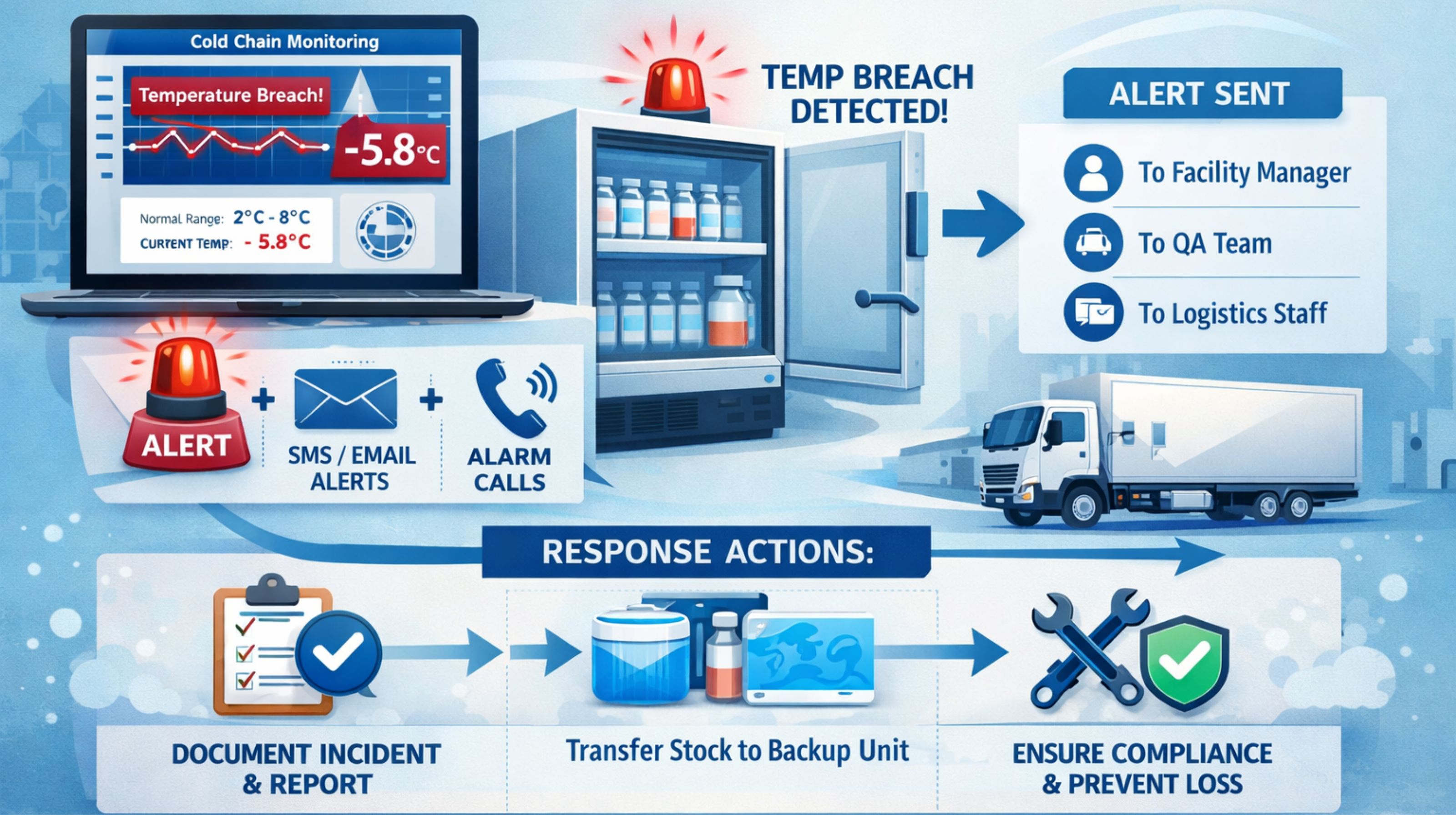
What happens when you get a cold chain temperature breach alert?
That notification on your phone or dashboard isn't just data; it's a decision point that starts a clock. In reality, the protocol is less about perfect checklists and more about managing risk under pressure.
What a temperature breach alert actually means
Technically, an alert means the environment fell outside the set range for a defined time. But it doesn't automatically mean the product is ruined. More often than you'd think, it's something like a door left open during a quick pallet swap.
The reality of the initial response
Sure, the manual says "initiate investigation immediately." But the first hour is usually chaotic. The real priority? Isolate the specific shipment or unit to stop the whole operation from freezing up, while someone runs to check the sensor against a backup thermometer.
The common mistake everyone makes
People get fixated on the temperature graph. The detail they miss is the product's thermal mass and exposure time. A dense pallet of frozen vaccines in the middle of a truck will hold its temperature long after the air around it has warmed.
When to escalate versus when to document and monitor
You escalate immediately for a breach in the core zone of sensitive biologics. But for a short spike at the edge of a chilled food shipment that's close to expiry? Then the protocol usually shifts to just watching it closer and documenting everything.
FAQ
Who needs to be notified first when an alert comes in?
You call the on-site logistics lead first—the person who can physically secure the shipment. The quality team comes later. It's an unwritten rule: contain it, then assess it.
How long do we have to complete the investigation report?
The full formal report can take days. But most client contracts want a preliminary assessment—basically, why you moved product to a quarantine fridge—within 2 to 4 hours.
Can sensor calibration errors void a breach alert?
They can, but proving it is tricky. You need to compare data from the primary and backup loggers. A classic mistake is not having the backup in the same thermal spot, which makes your comparison data worthless.
What's the biggest limitation of these alert protocols?
It's the trade-off between speed and accuracy. The protocol forces you to act fast, but the real stability data you need to judge the product's fate takes much longer to get. You're often deciding with half the picture.


Comments
Post a Comment