What Fleet Managers Get Wrong About Remote Engine Kill Compliance
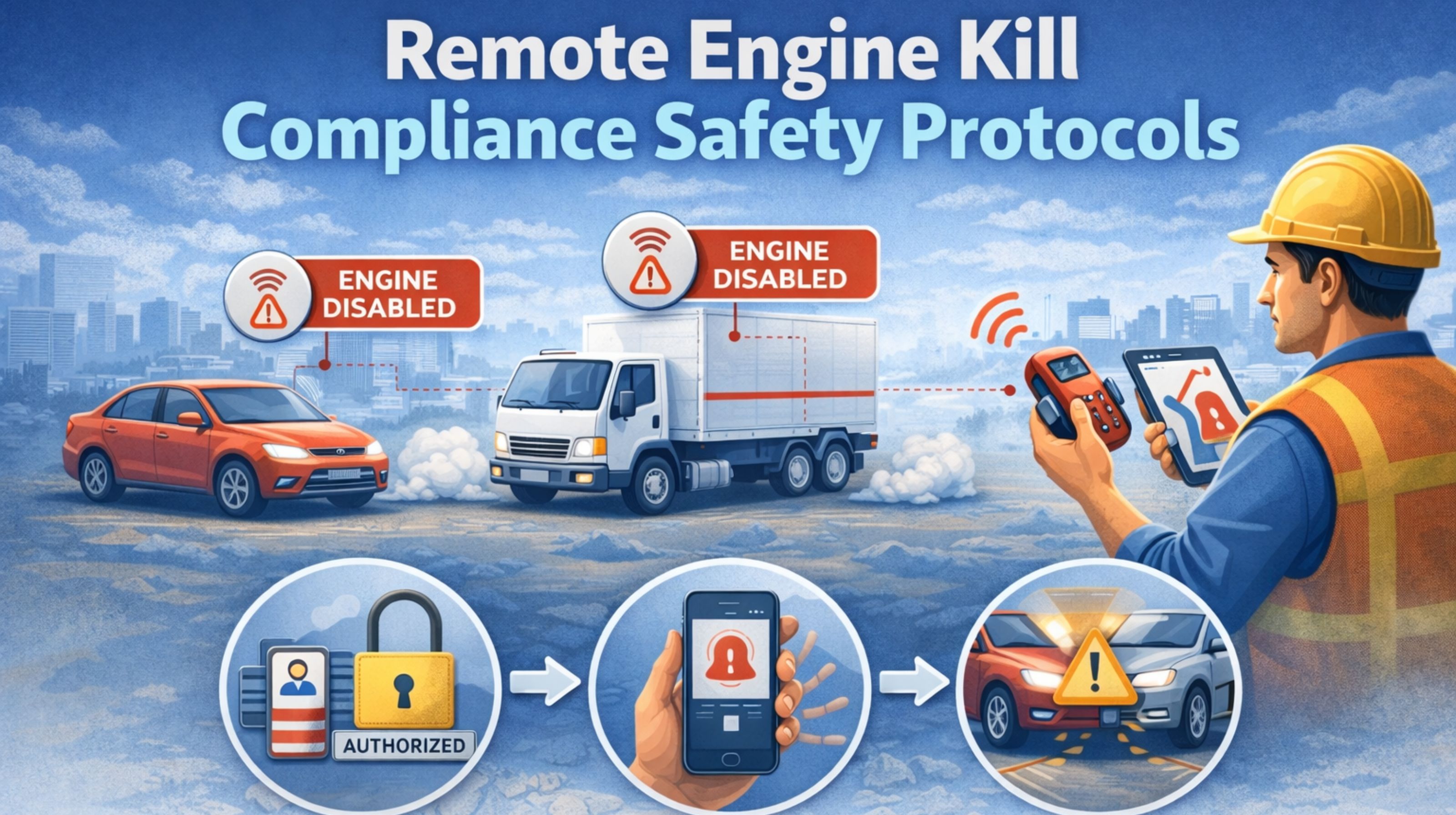
What Fleet Managers Get Wrong About Remote Engine Kill Compliance
When regulators mandate remote engine kill capabilities, the immediate thought is about installing a device that stops a vehicle. The real challenge isn't the technology; it's managing the operational and legal fallout when you're forced to use it. Compliance is a checkbox, but safety is a daily protocol.
What Remote Engine Kill Actually Means for Your Drivers
In practice, a remote kill isn't a simple "off" switch. It's a protocol that must account for vehicle speed, location, and immediate hazard. I've seen systems that simply cut fuel to the engine, which can leave a truck stranded in a live traffic lane—creating the very emergency you're trying to prevent. The real meaning is having a documented process for when and how to deploy it, not just proving the button works.
The Reality of Using Kill Switches Under Pressure
Most compliance training focuses on the legal authority to use the kill switch, not the split-second decision-making required. In reality, dispatch or security teams rarely have the real-time situational awareness needed. A common scenario is killing the engine for a suspected theft, only to discover the driver was authorized but had a dead radio. The aftermath involves tow trucks, angry customers, and a major operational delay.
The Hidden Risk of Over-Reliance on Technology
A major misunderstanding is that the kill switch replaces sound driver management and vehicle security. It becomes a crutch. I've watched fleets install these systems and then scale back on physical ignition locks or driver credential checks, thinking the digital solution is foolproof. This creates a single point of failure; if the telematics unit fails or loses signal, you've lost your primary security layer.
When Remote Kill Makes Sense Versus When It's a Liability
This protocol makes clear sense for high-risk cargo or in cases of verified, active theft where the vehicle is stationary. It becomes a liability when applied broadly to all vehicles without considering context, like using it for routine disciplinary action or payment enforcement. The decision hinges on one question: is the immediate physical risk of the vehicle moving greater than the risk of disabling it in this specific environment? If you can't answer that instantly, you shouldn't be pressing the button.
FAQ
Does compliance require logging every kill switch activation?
Yes, and most managers ignore the depth of log required. It's not just a timestamp. A defensible log includes the reason, the authorizing person, the vehicle's location and speed at activation, and the outcome. Without this, you lack an audit trail if the action is questioned.
Can a driver override a remote kill command?
Typically, no, and that's a safety design feature. However, a practical detail often ignored is that many systems allow a brief window for the driver to restart the engine if the kill was triggered by error. This window is usually short (like 30 seconds) and only works once, preventing a true override but allowing for correction of a mistaken activation.
Are there legal protections if using the kill switch causes an accident?
Your compliance certificate offers no blanket protection. Liability hinges on whether the activation followed a reasonable safety protocol. If you kill the engine on a highway because of a late payment and cause a rear-end collision, your compliance status won't shield you from a negligence lawsuit. The protocol itself is what's on trial.
How does this integrate with other telematics like geofencing?
This is where the real power lies, but also the complexity. The safest systems use geofencing as a trigger for a warning, not an automatic kill. For example, if a vehicle leaves a predefined zone without authorization, the system might issue an alert to the driver and fleet manager, initiating a verification process before a kill is considered. Automatic kills based solely on location are notoriously problematic.


Comments
Post a Comment