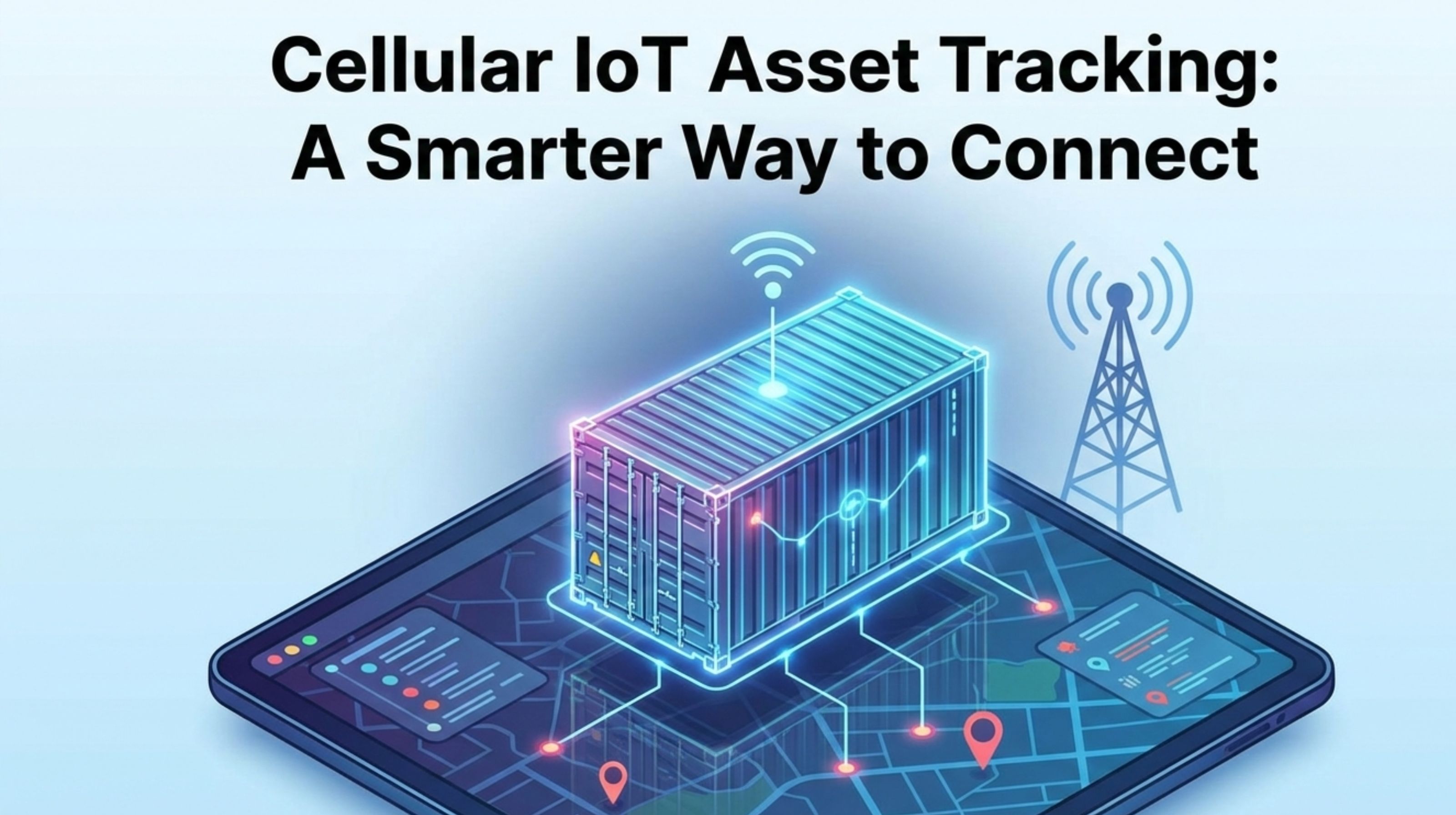
Lately, I’ve noticed a significant shift in how businesses, big and small, approach the daunting task of keeping tabs on their valuable mobile assets. There used to be this underlying hum of anxiety, a constant worry about where things were, or worse, where they weren't. What changed recently is a widespread adoption of more intelligent solutions, specifically in the realm of cellular IoT asset tracking, which has truly redefined what "visibility" means.
I remember the old days, not so long ago, when a missing container or a misplaced piece of heavy machinery could throw an entire operation into disarray. The phone calls, the frantic searches, the estimates of lost time and revenue – it was a knot in the stomach that no amount of planning seemed to fully untangle. I’ve seen that look of quiet desperation on managers’ faces more times than I care to count, the one that says, "I know it's out there somewhere, but I have no idea where to even begin looking." This isn't just about the financial hit; it's about the emotional toll of uncertainty, the drain on human energy spent chasing ghosts.
From what I’ve seen on the ground, the advent of reliable cellular IoT asset tracking has started to unravel that knot. It’s not just about attaching a device; it’s about creating a living, breathing digital twin of your physical world. Imagine tracking thousands of pallets across different states, or monitoring critical medical equipment moving between cities like Chennai and Hyderabad. The peace of mind that comes from knowing exactly where each item is, in real-time, is palpable. It transforms operations from reactive damage control to proactive management. This isn't just a technological upgrade; it's a fundamental shift in operational philosophy.
One assumption I've watched get continually challenged is that cellular IoT is exclusively for extremely high-value items or only viable in dense urban areas. Yet, I've seen it deployed successfully to track something as seemingly mundane as toolboxes across sprawling construction sites in rural India, or even the flow of produce from farms to mandis. The costs have come down dramatically, and the network coverage, especially with LPWAN technologies like NB-IoT and LTE-M, has expanded to make tracking feasible in places we never thought possible. It's truly eye-opening to see a small business owner, who once relied on manual manifests, suddenly have a dashboard showing him the precise location of his entire delivery fleet, saving precious rupees on fuel and time. This isn't just about tracking expensive machinery; it’s about optimizing every single component of a logistical chain.
After watching this happen more than once, I've realized that the true power of cellular IoT asset tracking isn't just in locating a lost item. That's the immediate, obvious win. But the deeper, more profound benefit lies in the data analytics it unlocks. Most blogs about this topic focus purely on the "where." But what about the "how" and the "why"? This is an overlooked angle, in my opinion. We're talking about patterns of movement, dwell times, route efficiencies, even environmental conditions if the sensors are robust enough. The system can alert you to a vehicle taking an unexpected detour, or a temperature-sensitive shipment experiencing fluctuations. It moves beyond simple tracking to becoming a predictive tool, anticipating issues before they become crises. This proactive insight fundamentally changes how logistics and supply chains are managed.
There was a time when deploying such a system felt like a massive undertaking, reserved only for enterprises with deep pockets. Yet, the ecosystem has matured to a point where even a medium-sized enterprise can integrate robust solutions without overhauling their entire IT infrastructure. The practical realization most blogs skip is that this isn't a "rip and replace" scenario anymore; it's often an enhancement. You don't need to rebuild your entire logistics system from scratch. Instead, these solutions are designed to integrate, providing an overlay of intelligence that enhances existing processes. It’s about smart augmentation, not radical disruption, at least not in the sense of a complete overhaul.
I remember a particular incident involving a fleet of medical vans, critical for delivering life-saving supplies, that used to be a constant source of worry. Drivers would sometimes get delayed in traffic, or take unforeseen detours due to road closures, and there was no way for the central team to know their exact ETA. The stress in the control room was palpable. With the implementation of cellular IoT asset tracking, suddenly, every van became a dot on a map. Not only did this allow for real-time adjustments to routes, but it also provided invaluable data for long-term route optimization and driver performance analysis. The transformation was dramatic; the worried faces were replaced by a quiet confidence, knowing that they had a firm grasp on every single asset.
This isn't just about preventing theft or loss, though those are significant benefits. It’s also about improving customer service. Imagine telling a client the precise minute their consignment, maybe a crucial component for their factory, will arrive. That level of certainty builds immense trust. It’s about operational efficiency, reducing idle times, optimizing fuel consumption, and extending the lifespan of assets through better utilization. I saw one company track their construction equipment, and based on the usage data, they realized they could redistribute certain machines more effectively across different sites, saving ₹50,000 per month on rentals alone. That kind of insight, born from simple location data, is gold.
The gentle hum of the servers, quietly processing data from thousands of devices spread across the country, has replaced the frantic ring of phones asking, "Where is it?" It’s a silent revolution, really. The comfort it brings, knowing that precious goods are accounted for, that schedules are being met, that operations are flowing smoothly even in the face of unpredictable events like a sudden monsoon downpour on the highway – that’s invaluable. It's a foundational layer for truly smart logistics, allowing businesses to breathe a little easier and focus on growth rather than constant problem-solving.
Ultimately, embracing cellular IoT asset tracking is about investing in foresight. It’s about moving from a world of reactive responses to proactive decisions, gaining a clarity that was once unimaginable. It allows you to feel truly in control of your moving parts, transforming the unknown into the known, and the uncertain into the assured.


Comments
Post a Comment