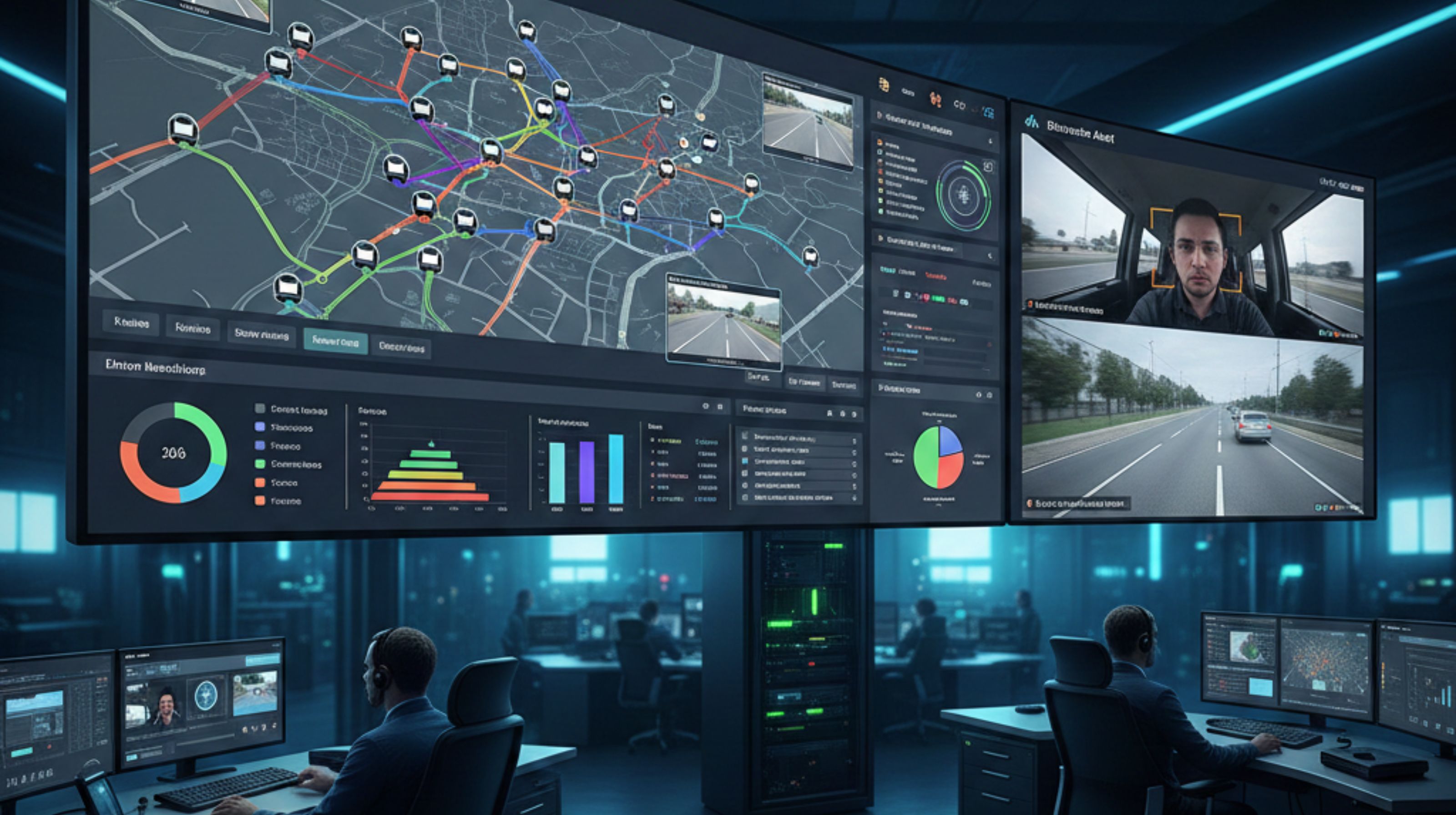
Lately, I’ve noticed a palpable shift in the conversations surrounding fleet management, almost like a collective holding of breath followed by a slow, thoughtful exhale. The road, as we all know, is an unpredictable beast, especially on our bustling highways near Bengaluru or navigating the tight lanes of an old city. For years, the struggle to truly understand what happens inside and around a commercial vehicle has been a heavy burden, weighing down managers and drivers alike with constant worry. What changed recently, however, isn’t just the vehicles themselves, but the eyes watching over them—eyes that don’t blink, and minds that learn. This quiet revolution, I've observed, is unfolding through the advent of the AI video telematics platform.
I remember a conversation vividly, just a few months ago, with a fleet owner in Pune. He spoke of the sleepless nights, the dread of a phone call about an accident, the endless paperwork, and the frustrating ambiguity that always seemed to cloud accident reports. His voice carried the exhaustion of someone constantly battling unseen forces. His primary concern wasn't just the monetary loss, though that was significant; it was the human toll, the safety of his drivers and the reputation of his company. The existing telematics, while providing data points, often felt like reading a book with half the pages torn out. You knew *what* happened, but rarely *why* or *how* it escalated. It was a constant problem, a deep furrow in the brow of an industry that moves the nation.
Many solutions on the market often begin and end with surveillance, focusing purely on identifying driver infractions. But from what I've seen on the ground, that approach misses a critical piece of the puzzle, an overlooked angle competitors often ignore. The real power of an AI video telematics platform isn't just in catching bad habits, but in protecting good drivers. Imagine a scenario where a sudden, harsh brake isn't immediately flagged as dangerous driving but is instead accompanied by video evidence showing a street dog darting out unexpectedly. This isn't about punishment; it’s about providing context, understanding the human element in a high-pressure environment. It shifts the dynamic from a "gotcha" culture to one of genuine support and training, turning potential liabilities into opportunities for learning and improvement.
There's an assumption that drivers will inherently resist any technology that feels like "big brother" watching over their shoulders. And honestly, who can blame them? Their cab is their office, their sanctuary. I’ve heard the initial grumbles, seen the wary glances at newly installed cameras. But after watching this happen more than once, I’ve also witnessed a fascinating transformation. The skepticism often melts away the moment the camera, powered by intelligent AI, actually clears their name in a disputed incident. Suddenly, it’s not just a surveillance device; it’s their witness, their defender. A driver who was wrongly accused of causing a fender-bender on a crowded arterial road in Delhi found immediate vindication through the video footage. That shift from resistance to relief, from feeling monitored to feeling protected, is a profound and often overlooked aspect of adoption.
The practical realization most blogs skip is that while data is king, context is its crown. A data point showing a sharp turn or heavy acceleration can be interpreted in a dozen ways. Is it reckless driving, or an evasive maneuver to avoid a child who stepped onto the road? Is it fatigue, or a moment of distraction? The AI in these advanced telematics systems is learning to differentiate, to understand the nuances that simple sensor data cannot. It’s not just reporting events; it’s interpreting them, offering insights that were previously locked away in the fleeting moments of the road. This deep understanding means less time spent on investigations and more time focusing on actual safety enhancements. It’s about moving beyond raw metrics to actionable intelligence, where every decision is informed by real-world visuals, not just abstract numbers.
I felt a pang of empathy for a young fleet manager I met recently. He was burdened by spiraling insurance costs and a reputation for frequent, albeit minor, incidents. The pressure was immense, almost visible in the way he rubbed his temples. He was considering scaling back his operations, losing hope that he could truly gain control. His inner thoughts, I imagined, must have been a chaotic storm of budgets, schedules, and driver well-being. But then he started talking about how their new AI video telematics platform had not only reduced accident frequency but also dramatically lowered false claims. He spoke of a specific incident where a pedestrian had deliberately walked into one of their slow-moving trucks to claim damages, only to be debunked by crystal-clear video evidence. The relief in his voice was unmistakable, a quiet triumph that transcended mere financial savings.
It’s moments like these that truly highlight the difference. It's not just about installing cameras; it's about deploying a smart ecosystem that constantly learns and adapts. The investment, which might seem substantial at, say, ₹50,000 to ₹100,000 per vehicle depending on the setup, quickly proves its worth not just in preventing accidents but in streamlining operations and fostering a culture of accountability and safety. The ability to identify risky behaviors before they lead to incidents, to provide targeted coaching based on actual footage, and to clear drivers’ names in disputes, creates a ripple effect of positive change throughout the entire fleet. The hum of the engine, the glare of the morning sun on the windshield, the subtle micro-expressions on a driver’s face—all these sensory impressions, once lost, are now part of a comprehensive safety narrative. The realization dawns slowly, then powerfully: this technology isn't just monitoring; it's actively contributing to a safer, more efficient road ahead, granting an invaluable sense of peace. The adoption of a robust AI video telematics platform moves us closer to that ideal, one safer journey at a time.


Comments
Post a Comment