Remote Engine Immobilizer Legal Compliance by State
Remote Engine Immobilizer Legal Compliance by State
Figuring out what's legal with remote engine immobilizers means you have to juggle a mix of federal, state, and even local rules. Getting it right is key to staying compliant and avoiding any headaches.
Federal Regulations and Standards
On the federal level, any remote immobilizer has to follow FCC rules for radio frequency devices. Crucially, it also mustn't mess with critical safety systems—think things like airbag deployment, which is obviously non-negotiable.
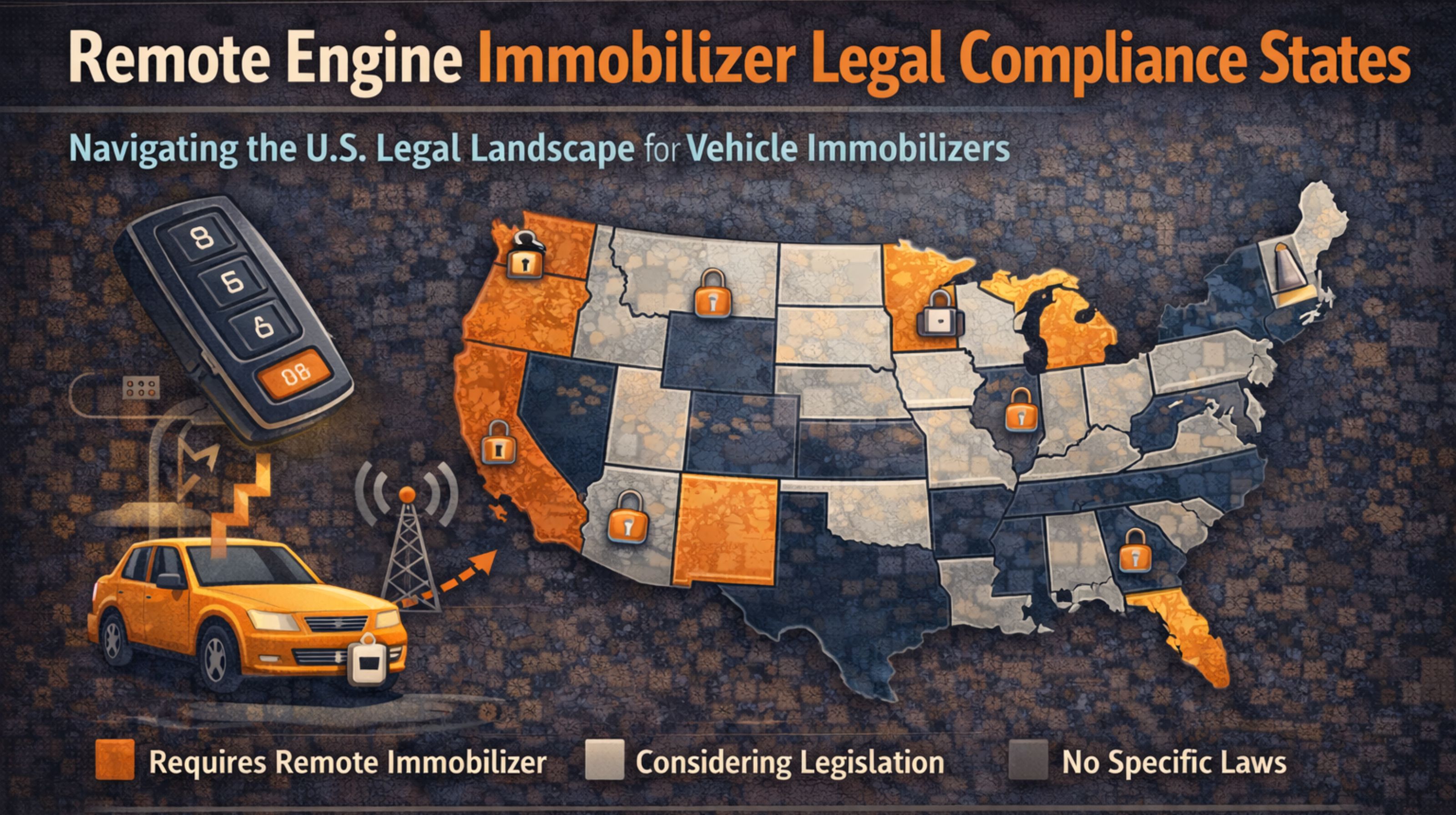
State-by-State Legal Variations
This is where it gets tricky. State laws can be all over the map. Some states are strict about who can install these devices, requiring specific licenses. Others have rules about using GPS tracking or the remote shutdown feature, especially if it's tied to repossession or missed payments.
Insurance Requirements and Discounts
Here's a potential upside: a lot of insurance companies offer discounts for approved anti-theft gear. But to actually get that discount, they usually want it installed by a pro and will ask for certification to prove it was done right.
Installation and Consumer Protection Laws
Various states have consumer protection laws that come into play too. These can cover what you need to be told upfront, warranty details, and the lawful use of remote disabling—particularly when it comes to how repossession is handled.
FAQ
Is a remote engine immobilizer legal in all 50 states?
Generally, yes, the devices themselves are legal. But some features, like built-in GPS tracking or use by a lienholder, might be restricted depending on the state. You really have to check your local laws.
Do I need a professional to install an immobilizer for it to be legal?
Often, yes. A lot of states, and definitely most insurance providers, require a certified professional to do the installation. This ensures it works properly and is usually the only way to qualify for any insurance discounts.
Can a lender remotely disable my car for non-payment?
That depends entirely on where you live. Some states allow it if it's clearly disclosed in your contract, while others have tight restrictions or ban the practice completely.
Are there FCC rules for these devices?
Absolutely. If your immobilizer uses radio frequencies to work, it has to have FCC certification. That's what keeps it operating legally without causing harmful interference to other devices.


Comments
Post a Comment