Is a Remote Engine Immobilizer Legal for Your Fleet?
Is a Remote Engine Immobilizer Legal for Your Fleet?
You're probably looking at fleet tracking systems and seeing that "remote kill switch" feature. It promises to stop a vehicle dead if it's stolen or a driver goes rogue. But the legal reality of actually using it? That's far more complicated than any sales brochure will ever let on.
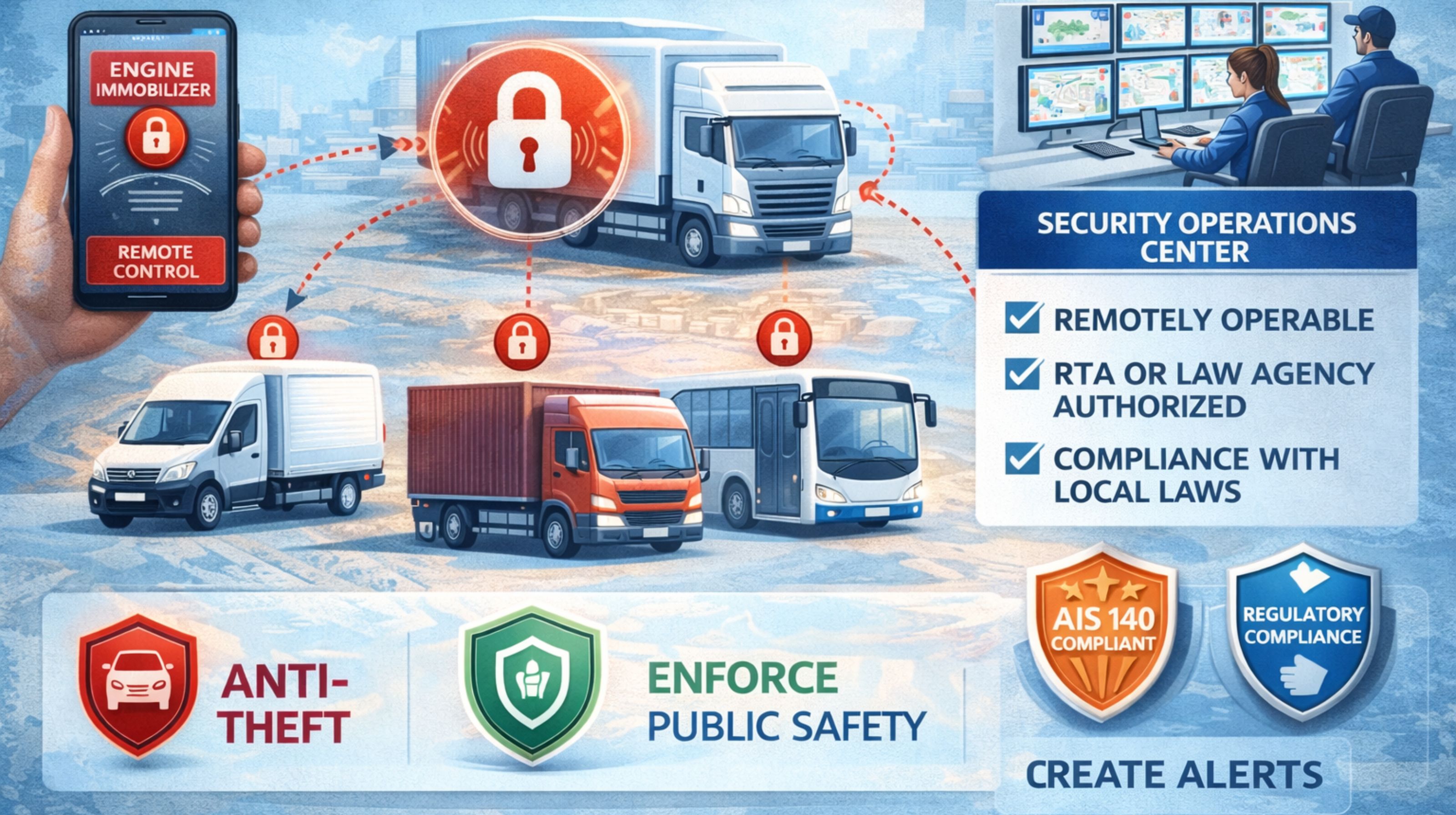
What a Remote Immobilizer Actually Does in Practice
In real fleet use, this feature is rarely the dramatic "kill switch" you might imagine. It's usually a slow, controlled shutdown that just prevents a restart, often triggered from a manager's phone. Honestly, I've mostly seen it used for recovering a company truck from a terminated employee who wouldn't bring it back, not for some cinematic high-speed chase.
The Compliance Reality Most Companies Face
Here's the thing: there's no single federal law that explicitly says "yes" or "no" to remote immobilizers for commercial fleets. Your compliance ends up depending on a messy patchwork of state laws, old case law about trespass to chattel, and the wording in your employment agreements. Most companies are operating in a gray area, leaning hard on some broad language buried in their vehicle use policies.
The Critical Misunderstanding About Liability
The biggest legal risk isn't really in using the immobilizer itself—it's in what happens right after. If you remotely disable a vehicle and it causes an accident, or blocks an ambulance, or leaves a driver stranded in a dangerous spot, your company's liability shoots through the roof. Courts tend to look at whether the shutdown created a danger that anyone should have seen coming.
When Remote Disable Makes Sense (And When It Doesn't)
Only consider this tool if you have ironclad, signed driver policies, crystal-clear procedures for who can authorize a shutdown and why, and really solid insurance. It can make sense for high-value specialty equipment you can't afford to lose. But it's a genuinely terrible idea for your general delivery vans without explicit, documented consent. In those cases, the legal exposure can easily outweigh the value of the asset you're trying to protect.
FAQ
Can I legally disable a company vehicle if an employee is late on payments for a personal use program?
That's a high-risk area. If the vehicle is seen as being in the employee's possession under a lease agreement, hitting the kill switch could be viewed as a "self-help repossession." That's actually illegal in a lot of states unless you have a court order.
Do I need to notify a driver before immobilizing the vehicle?
From a pure risk management standpoint? Absolutely. A sudden loss of power, even at a low speed, can cause panic and lead to an accident. The best practice is to contact the driver first. The only real exception is if you've confirmed it's an actual theft.
Are there states where this is explicitly illegal?
The laws are still changing. Some states have consumer protection laws about disabling devices on financed vehicles that *could* be interpreted broadly. For commercial fleets specifically, it's much less clear—which is honestly the core of the whole problem.
What's the one clause that must be in my driver agreement?
Beyond just getting consent, you need their explicit acknowledgment that the vehicle is company property, subject to remote disabling for policy violations or unauthorized use. And that the driver shouldn't assume any expectation of privacy regarding where it is or how it's being operated.


Comments
Post a Comment