How Much Fuel Are Your Cement Mixers Wasting Just Sitting There?
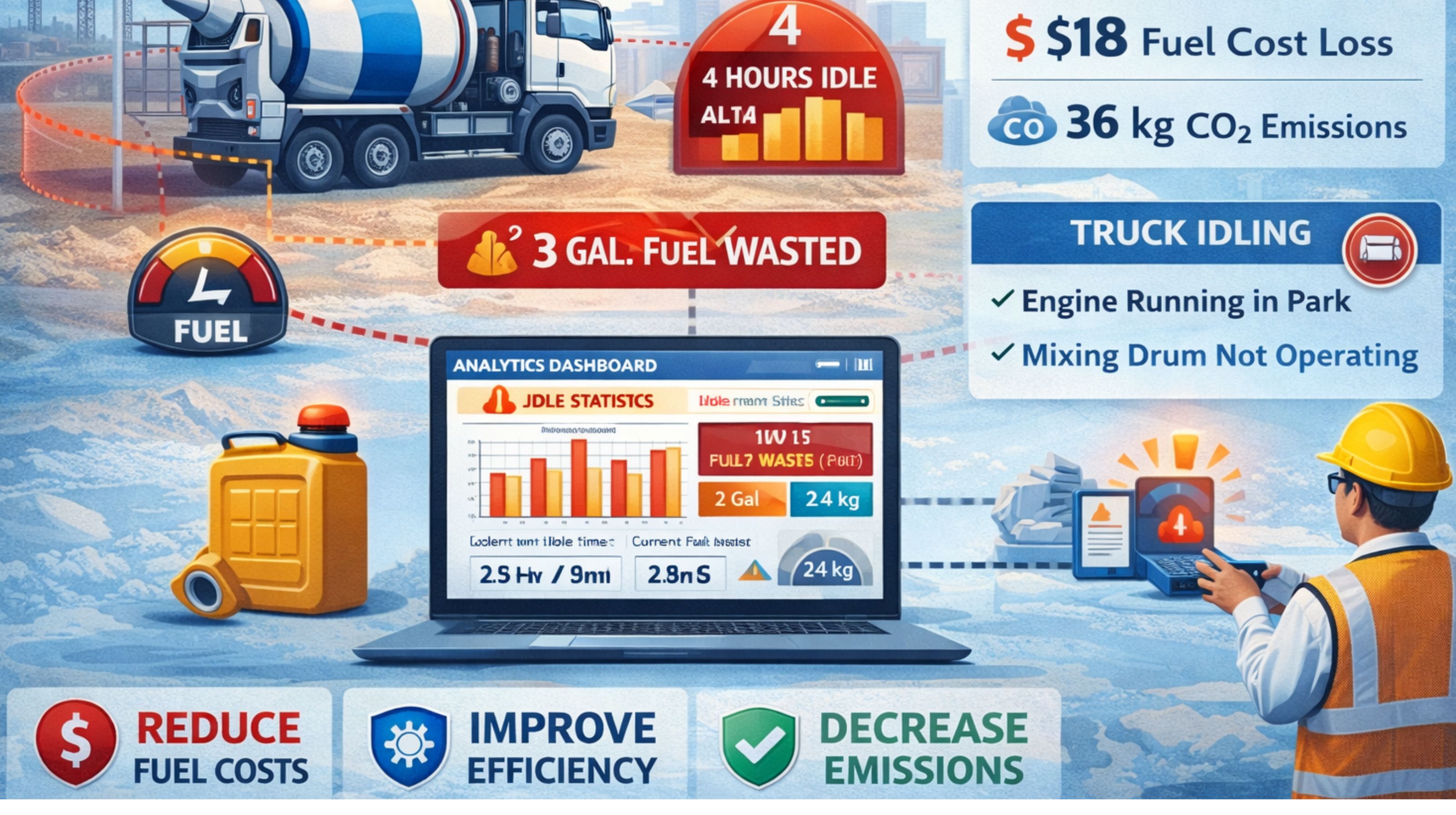
How Much Fuel Are Your Cement Mixers Wasting Just Sitting There?
You see the mixer on site, engine running but drum barely turning. It's a familiar sight, and you have to wonder—is that just the cost of doing business, or is it a slow leak in your fuel budget that some decent data could actually plug?
What Idle Time Analytics Actually Measure
In practice, this isn't just a simple timer. It's tracking engine-on hours where the drum rotation or vehicle movement is below a set threshold, and then correlating that time with fuel consumption rates from your telematics. The end goal is to assign a real, tangible dollar cost to all that waiting.
The Reality of Idle Time on a Job Site
You might think the worst idle times come from poor planning, but often they don't. They come from standard operations. Waiting for the crew to be ready for the pour, waiting for an inspection, or during washout—these periods feel productive, but they're just burning fuel without moving an inch of material.
The Misleading "Zero Idle" Goal
Pushing for near-zero idle time is a common mistake, and it can backfire. It leads to rushed washouts that leave residue and risk concrete setting up in the drum. Or it has drivers shutting down during short, necessary waits, which can cause start-up issues and doesn't actually save the fuel you think it does.
When to Act on Idle Fuel Waste Data
Intervention makes sense when the analytics show a pattern—consistent, long idle periods at the same location, like a specific plant gate, or with the same driver. That indicates a procedural stall. It doesn't make sense to micromanage the 10-15 minutes of idle required for a proper, thorough drum clean-out. That's just the job.
FAQ
What's considered a "high" idle time percentage for a cement mixer?
If a mixer is idling 30% of its engine-on hours, that's a major red flag. From what I've seen, well-managed fleets aim for under 20%, but you'll rarely see it dip below 15%. There are just too many unavoidable operational pauses built into concrete placement.
Can idle time analytics be gamed by drivers?
Yes, and it's a practical detail that often gets ignored. A driver can slightly increase the drum rotation speed to drop below the "idle" threshold. The irony is, that often uses more fuel than efficient low-speed idling. So the data looks better while the actual waste gets worse.
Does weather significantly impact idle fuel waste?
Absolutely. In cold climates, the necessary warm-up idling to protect the engine and hydraulic systems can easily double standard idle fuel use. That's a seasonal cost you have to factor in; it shouldn't be treated as an efficiency failure.
Should I link idle time data to driver bonuses?
Be very cautious with that. It often just incentivizes the wrong behavior—like poor washouts or shutting off during necessary brief waits. The data is better used for coaching and process review. For instance, to analyze why a specific pour site always has 45 minutes of mixer queue time.


Comments
Post a Comment