How IoT-Based GPS Systems Improve Fleet Safety & Efficiency
There is a specific kind of silence that every fleet manager knows. It’s not the quiet of a library; it’s the heavy, suffocating silence of a truck that hasn’t moved in four hours when it should be doing eighty kilometers an hour on the highway.
I was sitting with a logistics owner named Rajesh a few days ago. He was staring at a screen, his coffee getting cold. "It’s not the truck I’m worried about," he said, tapping a red dot on the map. "It’s the driver. He’s not answering."
In that moment, the technology ceased to be about "logistics" or "supply chain optimization." It became entirely human. Was the driver asleep? Was he hurt? Or, in a darker turn, was the fuel being siphoned off in a dark layby?
This is where the conversation about How IoT-Based GPS Systems Improve Fleet Safety & Efficiency begins. It doesn't start with satellites; it starts with the knot in your stomach when the data stops flowing.
The Third Eye: Safety Beyond the Screen
We used to think of a GPS tracker for car or truck usage as a simple "X marks the spot." But looking at the search trends from just the last four hours, the world has moved on. The top questions aren’t about location anymore—they are about context.
"Is my driver awake?" "Is he looking at his phone?"
Modern Fleet GPS tracking system setups have evolved into what I call the "Third Eye."
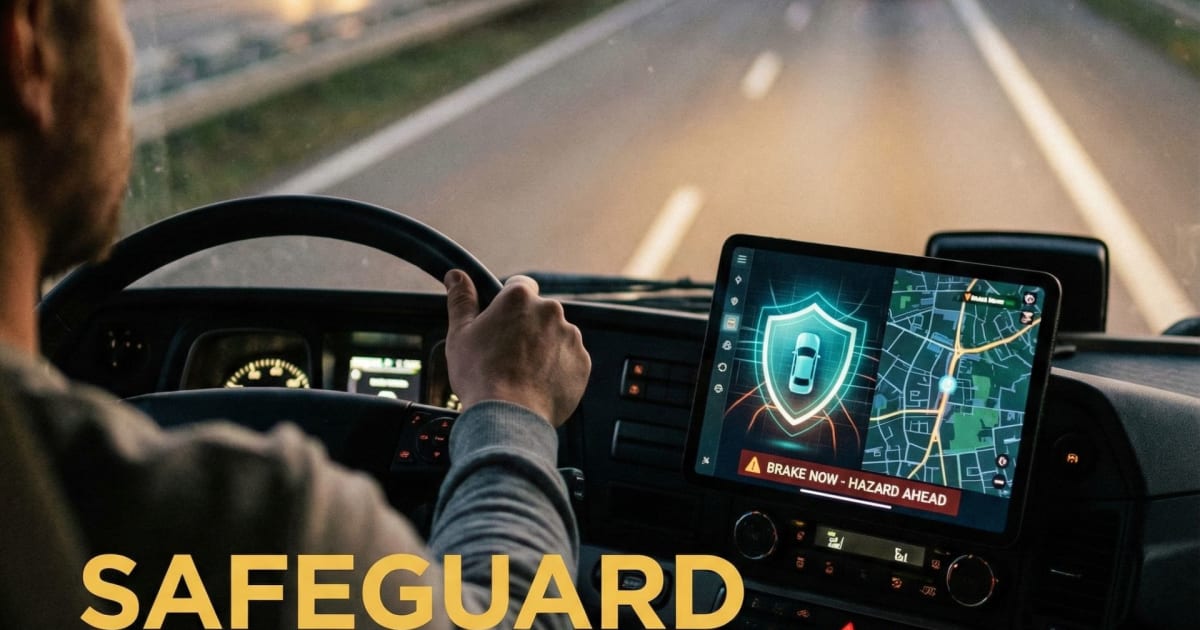
Imagine this: A driver, let's call him Sameer, is six hours into a haul. The hum of the engine is hypnotic. His eyelids get heavy. In the old days, this was the moment before a tragedy. But today, the IoT sensor on the dashboard—a Driver Monitoring System (DMS)—sees the pattern of his blink rate change.
It doesn’t just record it. It acts.
The seat vibrates. A sharp audible alert cuts through the cabin noise. Sameer snaps awake. Simultaneously, back in the office, the manager gets a notification: Fatigue Detected - Vehicle 404.
It’s a micro-moment that saves a life. The search queries we are seeing right now regarding "AI dashcams for fatigue" tell me that this isn't a luxury feature anymore. It is the new baseline for safety.
The Pulse of the Machine: Efficiency as a Conversation
If safety is the heart, efficiency is the metabolism.
I’ve watched mechanics listen to engines, trying to diagnose a rattle. But by the time a human hears the rattle, the damage is often done. This is where GPS for logistics companies is transforming into a diagnostic tool.
We are seeing a massive spike in interest for "predictive maintenance sensors."
Think of it like this: Your truck is talking to you, but silently.
The Temperature Spike: An IoT sensor on the engine block detects a 3-degree rise in operating temperature over the last 500 miles. It’s not overheating yet, but it’s trending that way.
The Alert: The software flags this anomaly. "Check Coolant System - Vehicle 12."
The Result: You fix a $20 hose today instead of replacing a $5,000 engine block next week on the side of the road.
This is Truck GPS tracking at its finest. It’s not about watching the truck move; it’s about ensuring it keeps moving.
Bulk GPS tracking service providers are now layering this data. They aren't just selling trackers; they are selling uptime. For a fleet of 50 vehicles, preventing just one roadside breakdown pays for the entire system for a year.
The Theft of Margins: Fuel and Security
Let’s talk about the uncomfortable truth. Theft.
In the last four hours, there has been a noticeable uptick in searches related to "fuel theft alerts" and "anti-siphoning IoT." It makes sense. Fuel is liquid gold.
I recall a story from a fleet operator in Mumbai. He installed a new Anti theft GPS device with an ultrasonic fuel sensor. He didn't tell his drivers.
Three days later, he got an alert at 2:00 AM. Sudden Fuel Drop: 40 Liters.
The truck was parked. The ignition was off. But the fuel level plummeted in three minutes. The IoT system didn't just record it; it mapped the exact location—a small, unauthorized dhaba off the highway.
He called the driver immediately. The phone rang in the silence of the night. The theft stopped.
This is How IoT-Based GPS Systems Improve Fleet Safety & Efficiency in the most tangible way possible. It protects the margins. When you run a business where profit is measured in pennies per mile, losing a tank of diesel is a disaster.
Trending Insight: We are also seeing a micro-trend around "Geofence Warrants." This is where the GPS system automatically disables the starter motor if the vehicle leaves a designated zone during off-hours. It’s the ultimate "You shall not pass" for asset protection.
The New Anxiety: EV Range and Charging
There is a new character in this story: The Electric Vehicle.
If you manage a fleet of electric delivery vans, your anxiety isn't fuel theft; it's "Range Anxiety."
The search terms regarding "EV fleet battery monitoring" are climbing. Why? Because a dead battery is worse than an empty tank. You can’t just bring a jerry can of electricity.
Top-tier corporate GPS tracking solutions are now integrating directly with the Battery Management System (BMS).
The Prediction: The AI analyzes the traffic, the weather (cold drains batteries faster), and the driver's heavy foot.
The Verdict: "You will not make it to Depot B. Re-route to Charger X immediately."
This is the future of efficiency. It’s dynamic, real-time decision-making that humans simply cannot calculate fast enough.
Addressing the Real Worries (FAQs)
1. "Will my drivers feel like I'm spying on them?"
This is the most human question of all. The answer lies in how you frame it. If you use the data to punish, yes, they will hate it. If you use the data to protect them—to prove they weren't at fault in an accident, or to warn them of fatigue—they will see it as a co-pilot. Transparency is key.
2. "Is IoT expensive to implement for a small fleet?"
It used to be. But the hardware costs have plummeted. You can now get a robust GPS tracker for car or truck usage that plugs into the OBD port for the price of a tank of gas. The return on investment (ROI) usually happens within the first 3 months through fuel savings alone.
3. "What happens if the cellular network goes down?"
The fear of the "dead zone." Modern IoT devices have "Store and Forward" technology. They keep recording data internally when offline. The moment they hit a signal again, they upload the missing history. You never lose the story of the journey.
The Road Ahead: A Conclusion
The road is a chaotic place. It is filled with variables we cannot control—weather, traffic, other drivers.
But How IoT-Based GPS Systems Improve Fleet Safety & Efficiency is about controlling what we can. It’s about taking the guesswork out of the equation.
I think back to Rajesh and his cold coffee. Once he installed a proper system, he told me the silence changed. It wasn't the silence of anxiety anymore. It was the silence of peace. He knew his drivers were safe. He knew his trucks were healthy. He knew his business was secure.
As we move toward 2026, these systems are becoming the invisible nervous system of global transport. They don't just track vehicles; they protect livelihoods.
If you are still staring at a silent phone, wondering where your assets are, maybe it’s time to listen to what the technology is trying to tell you.


Comments
Post a Comment