Construction Equipment Engine Hour Tracking API
Construction Equipment Engine Hour Tracking API
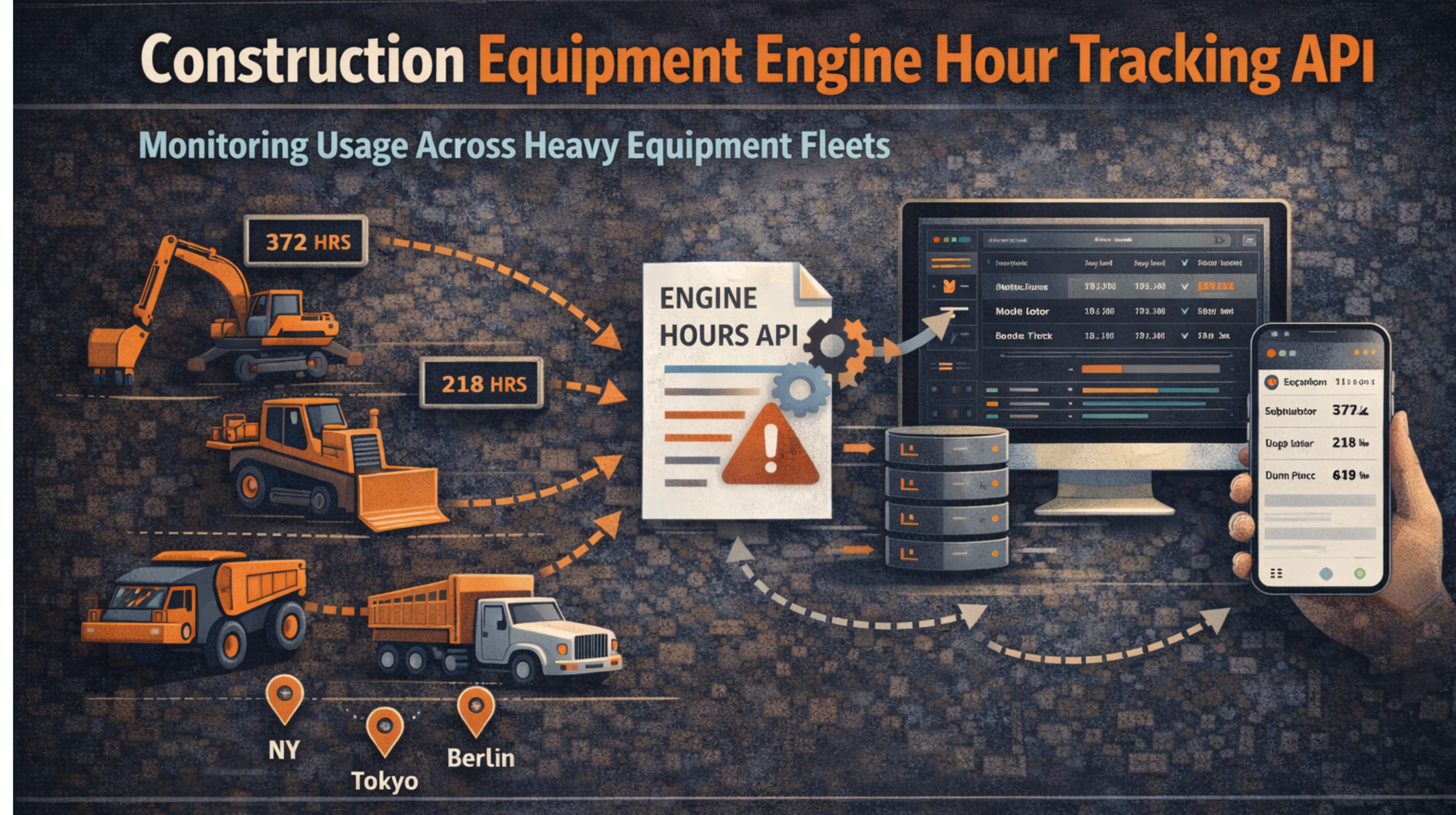
An engine hour tracking API gives you programmatic access to critical machine utilization data for your construction fleet.
Core Functionality of an Engine Hour API
At its core, the API's job is to pull accurate engine runtime data from telematics hardware or OEM systems through secure API calls.
Key Data Points and Integration Benefits
These APIs deliver detailed data—think total hours, idle versus working hours, and precise timestamps. This enables things like automated maintenance scheduling and much clearer utilization analysis.
Implementation and System Requirements
To get it running, you'll need API keys, compatible telematics devices on your equipment, and backend systems ready to process and store all that incoming hour meter data.
Selecting the Right API Provider
When you're evaluating providers, focus on data accuracy, overall reliability, the quality of their documentation, and how well it plays with your existing fleet management software.
FAQ
What is an engine hour tracking API?
It's an application programming interface that lets software systems automatically pull engine runtime data directly from construction equipment.
Why is API integration better than manual tracking?
It gets rid of manual errors, gives you real-time data, and opens the door for automating maintenance and billing.
What equipment can be monitored with this API?
Most modern machinery with electronic control units, or those fitted with compatible aftermarket telematics devices, can be integrated.
How is the engine hour data transmitted?
Data travels from the machine's sensor via cellular or satellite networks to a cloud server, where you can access it through API calls.
Can the API differentiate between idle and working hours?
More advanced APIs can. They use extra parameters like RPM or hydraulic pressure to figure out the engine's run state.
Is historical engine hour data available through the API?
Yes, typically. Providers usually keep a historical database you can query via the API for reporting and spotting trends.
How do I ensure data security with the API?
Go with providers that use API key authentication, encryption, and secure protocols like HTTPS for all data transfers.
What are common use cases for this API data?
You'll mostly see it used for predictive maintenance scheduling, warranty compliance, lease billing, and digging into equipment utilization rates.


Comments
Post a Comment