Cold Chain Temperature Excursion Alert Protocols
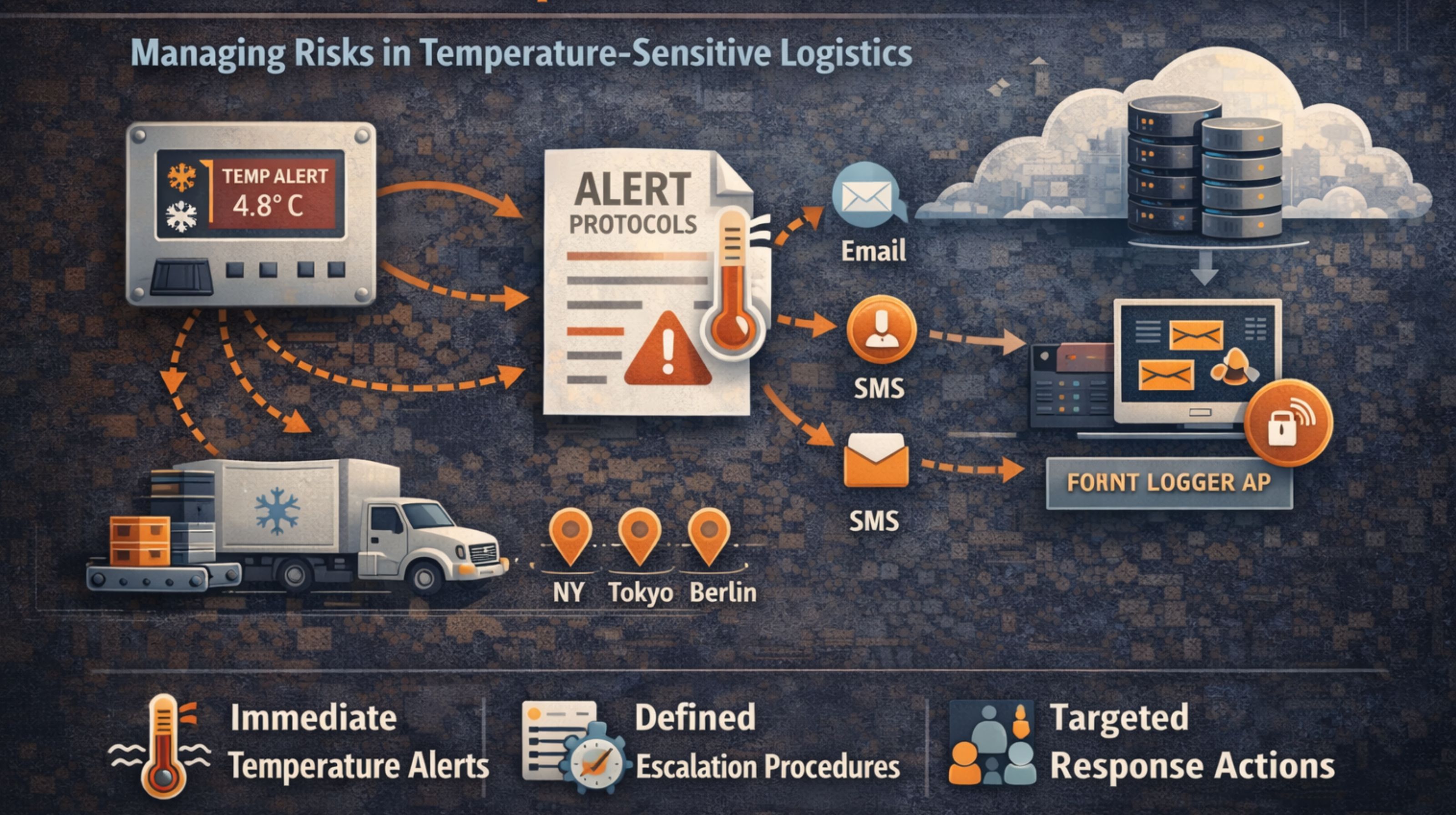
Cold Chain Temperature Excursion Alert Protocols
If you handle temperature-sensitive products, having a clear alert protocol for temperature excursions isn't just a good idea—it's mandatory. This procedure lays out the immediate, systematic response you need when storage conditions deviate from their validated range. It's the bedrock of patient safety, product quality, and staying on the right side of regulations, whether you're in pharmaceuticals, biotech, or food supply.
Immediate Containment and Notification Steps
When an alert comes in, speed is everything. Your first job is to limit any further impact. Immediately quarantine every affected product unit to stop it from accidentally being shipped out. Then, without any delay, notify your designated Quality Assurance contact and the Supply Chain or Logistics manager. That initial heads-up should include the alert time, the monitoring device ID, and the exact temperature breach that was recorded.
Launching the Formal Investigation
Next, you have to kick off a formal, documented investigation to find the root cause. The team needs to pull together all the relevant data: temperature logger charts, thermostat settings, equipment maintenance logs. They should talk to the personnel involved in handling, and review shipping paperwork and even external weather reports, if that's a factor. The goal is to figure out if this was due to equipment failure, a human mistake, or something else entirely.
Product Impact Assessment and Disposition
Now comes a critical scientific assessment, usually led by a Qualified Person or Product Specialist. They have to evaluate the potential impact on the product's quality, safety, and effectiveness. This means stacking the recorded excursion data against the product's known stability profile and its approved storage specs. Based on that risk assessment, a final call is made—to release the batch, reject it, or send it for more testing.
Corrective and Preventive Actions (CAPA)
Every single excursion needs to lead to Corrective and Preventive Actions, so the same thing doesn't happen again. Corrective actions tackle the immediate root cause—like fixing a broken refrigerator door seal. Preventive actions look at the bigger picture for systemic fixes. That could mean updating your standard operating procedures, rolling out better training for staff, or investing in more reliable monitoring tech.
FAQ
What defines a temperature excursion?
It's any deviation from the labeled storage temperature range for a product, even if it's just for a short time.
Who must be notified first during an excursion?
Always loop in Quality Assurance and the responsible Supply Chain or Logistics manager first. They'll get the formal process moving.
Can product be used after a minor excursion?
Never assume it's okay. Only a formal impact assessment, grounded in stability data, can make that determination.
What is the most critical part of the documentation?
Hands down, it's the investigation report. It needs to be complete, truthful, and backed by clear evidence that explains the root cause and justifies the final decision on the product.


Comments
Post a Comment