AIS 140 Emergency Button Integration Requirements
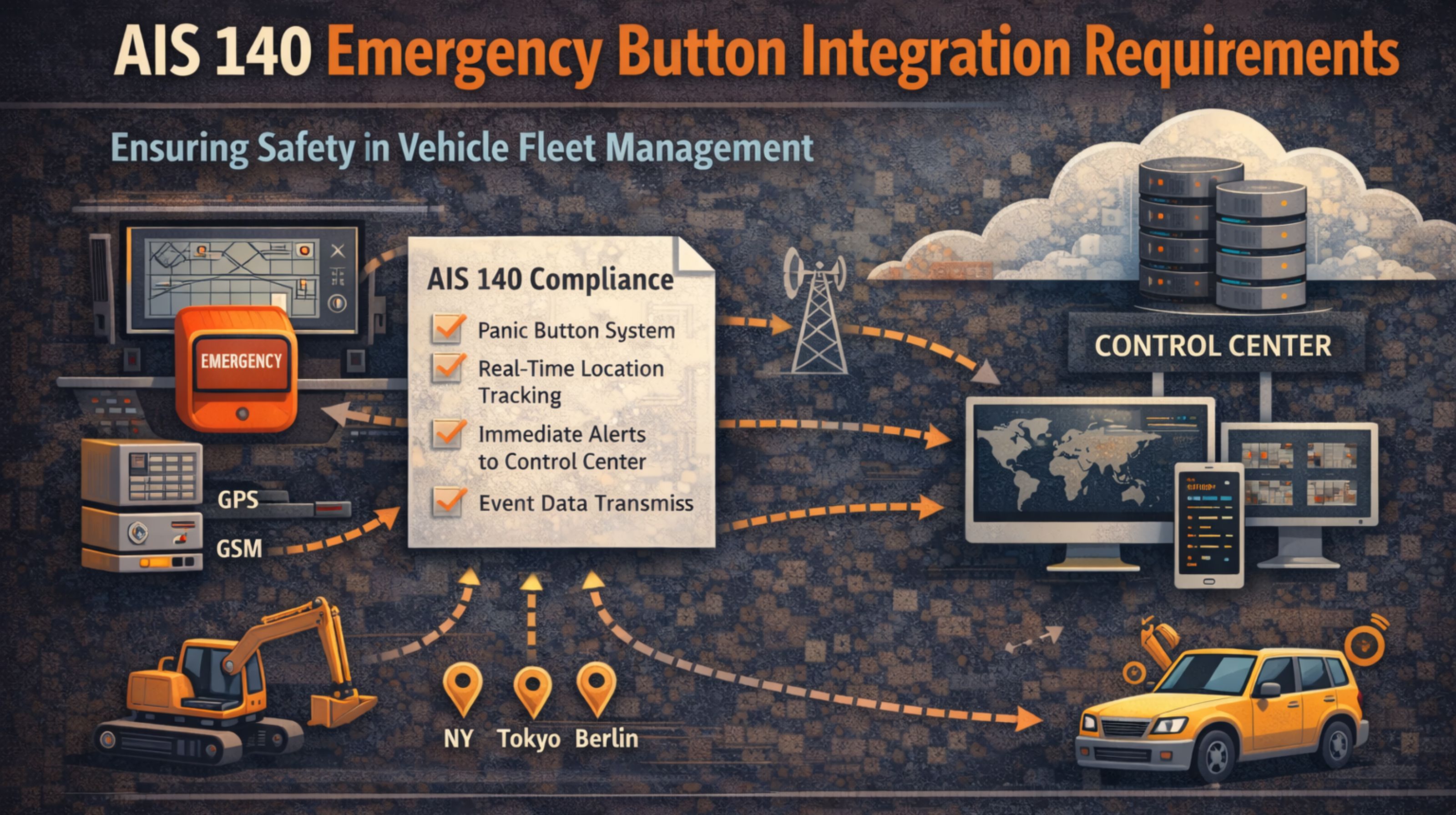
AIS 140 Emergency Button Integration Requirements
This guide walks through the mandatory technical and operational requirements for integrating the emergency button in any AIS 140 certified vehicle tracking system.
Hardware and Physical Integration Standards
The emergency button itself has to be a dedicated, hardwired panic switch. It needs to be physically accessible and installed well within the driver's reach.
Communication and Data Transmission Protocol
Pressing the button must trigger an immediate, high-priority data packet. This packet has to contain the vehicle ID, its current location, a precise timestamp, and a clear emergency flag, all sent straight to the backend server.
Backend Server and Control Room Compliance
On the other end, the backend software has to process that emergency alert instantly. It should display the alert prominently in the control room and support proper protocols so operators can acknowledge and handle it.
Testing, Certification, and Documentation
System integrators have to provide documented proof of successful end-to-end testing. Ultimately, you need to obtain the formal AIS 140 certification from an authorized testing agency.
FAQ
What is the primary purpose of the AIS 140 emergency button?
It gives the driver a manual panic button to instantly alert control rooms during a critical safety or security incident.
Is a wireless emergency button compliant with AIS 140?
No, it's not. The standard specifically requires a hardwired connection to the tracking device. This is for reliability, to prevent any signal failure.
What data must be sent when the button is pressed?
The alert packet has to include the vehicle's unique ID, live GPS coordinates, a precise UTC timestamp, and a specific emergency event code.
How must a control room respond to an emergency alert?
It should create both an audible and a visual alarm. There need to be clear protocols in place for an operator to immediately acknowledge it and then escalate if needed.
Can the emergency button be tested regularly?
Yes, but you have to use a specific test mode. That mode prevents the system from generating a live emergency alert to the control rooms.
What certification is required for the integrated system?
The complete vehicle unit—with the integrated button—has to pass AIS 140 type approval tests at an ARAI-approved lab.
Are there requirements for button durability and placement?
Absolutely. The button needs to be rugged and weather-resistant. It also has to be mounted within the driver's easy reach without getting in the way of normal operation.
What happens if the vehicle's main power is cut after pressing the button?
The tracking device must have a backup battery. This ensures the emergency transmission finishes sending, even if the main power is lost.


Comments
Post a Comment